

Dolphins In Captivity Right Or Wrong?
Keeping dolphins in captivity remains a controversial subject with arguments on both sides.
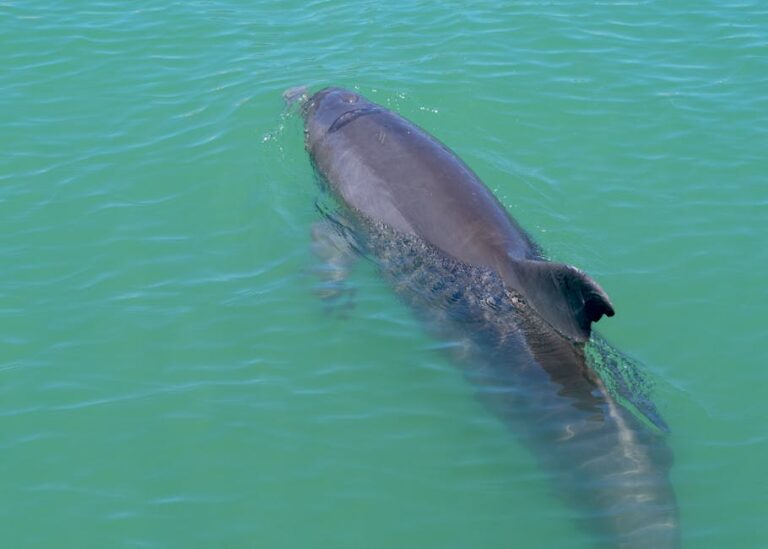
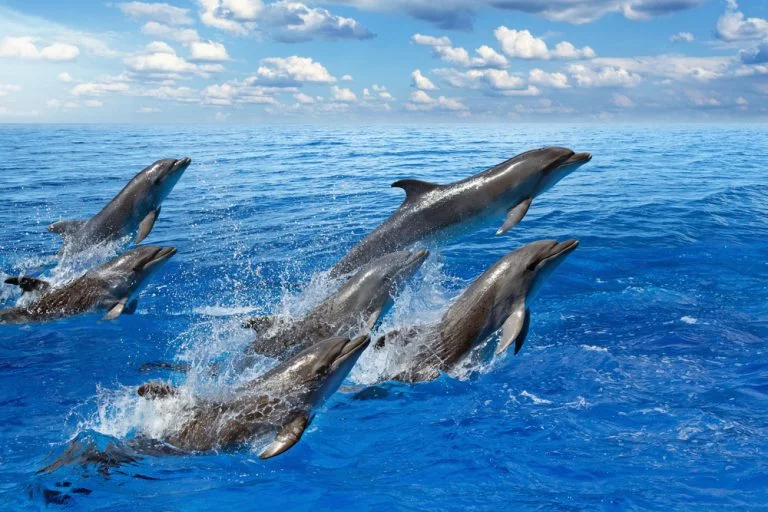
Featured image: two bottlenose dolphins.
Because dolphins are quick to learn and quick to perform, they became a target for dolphinariums, water parks, and amusement centres. Keeping them has grown into a substantial industry. Private ownership is a separate question, covered in our piece on owning a dolphin in the USA.
You can find them on display in casinos and shopping malls, doing tricks to catch your attention. The two species the industry has relied on most are the common bottlenose dolphin and the orca. The bottlenose in particular is a favourite because it is easier to house and train than an orca.
You may also get the chance to join a swim-with-dolphins programme. But the question remains: is keeping dolphins in captivity right or wrong?
Dolphins in captivity: why does it happen?
For research
Some researchers argue captivity is necessary. The case is that certain kinds of study need a controlled environment that the open sea cannot provide, and that captive animals can teach the public things about marine life that they would otherwise never encounter. Not everyone gets the chance to study a dolphin, or even see one, in the wild.
For entertainment
Commercial operators keep hundreds of dolphins to entertain a paying audience. The animals are trained to perform exaggerated tricks for the crowd.
The enthusiasm of the trainers and the permanent smile of the dolphin, which is a fixed feature of its jawline rather than an expression, hide a set of problems the parks would rather you did not think about.
The ugly side of dolphins in captivity
The 2013 documentary Blackfish gave the public an inside look at what keeping a large captive cetacean actually involves. It followed the story of an orca named Tilikum.
Tilikum was a star performer at SeaWorld Orlando and was involved in the deaths of three people: Keltie Byrne in 1991, Daniel Dukes in 1999, and the senior trainer Dawn Brancheau in February 2010. Critics of captivity argue the aggression came from the conditions the animal was kept in.
The stress starts well before an animal reaches a park. It starts at capture.
How dolphins are captured
What does it take to capture a dolphin?
It means taking an animal out of its habitat and away from its family group, permanently. Dolphin society is built on long-term bonds, and a live capture breaks them.
Hunters pursue the pod in fast boats and catch the selected animals in nets. The animals are then transported by truck, and by plane if the destination is far enough away.
Their final address is an artificial tank. Not all of them survive the journey, and the practice continues anyway. Those that do survive live out their lives in a concrete pool with the constant hum of the filtration system, performing for crowds.
Should it be legal to force another species to live like that until it dies?
Countries that have restricted dolphin captivity
Enough countries think not that the map has changed. Whale and Dolphin Conservation lists these countries as not allowing cetacean display or phasing it out: Bolivia, Canada, Chile, Costa Rica, Croatia, Cyprus, France, Hungary, India, Kazakhstan, Mexico, Nicaragua, Slovenia and Switzerland. Hungary and Switzerland got there by banning imports rather than display.
India’s 2013 policy told states to reject dolphinarium proposals, and its reasoning described dolphins as non-human persons who should not be held for entertainment. Canada banned keeping and breeding whales and dolphins in captivity in 2019, with animals already held exempt, and a French law of 2021 bans keeping orcas and dolphins in captivity from December 2026. In June 2025 Mexico’s Congress voted to amend the General Wildlife Law to ban marine mammal shows and breeding outside conservation programmes.
Others have taken a different route. The United Kingdom, Norway, and Luxembourg have not banned dolphin captivity outright, but the welfare standards required are strict enough that no operator has found it worth the cost. The UK has had no dolphinarium since the early 1990s.
Where captivity is still legal
In the United States, captive cetaceans are regulated under the Marine Mammal Protection Act and the Animal Welfare Act. SeaWorld ended orca breeding in 2016 but still keeps and breeds bottlenose dolphins, and most bottlenose dolphins in US and European parks are now captive-bred. Japan still has major dolphinariums, supplied in part by the Taiji drive hunt.
China has the largest captive industry, and it is still growing. The China Cetacean Alliance counted about 1,307 cetaceans of 15 species in Chinese ocean parks in July 2024, including more than 730 bottlenose dolphins and 22 orcas, more captive orcas than the United States holds. New facilities are also being built in Russia, the Middle East and parts of Southeast Asia, and some of them still take animals caught in Taiji or the Russian Far East.
The first ocean sanctuary for retired cetaceans in North America is still being built. In October 2025 the Nova Scotia government approved a 20-year lease for the Whale Sanctuary Project’s site at Port Hilford Bay, and the project broke ground in June 2026. It is not yet operating, and no opening date has been published. Our short list of genuine dolphin sanctuaries tracks which ones are open.
Dolphins are built for the sea, not for tanks, and their captive life expectancy has never convincingly beaten what they manage in the wild. Keeping dolphins in captivity never was and never will be right.
Continue exploring at our store
If this article sparked your interest, head over to the We Love Dolphins merchandise store for related reads and gear.
For the broader picture, see our full dolphin facts guide.
Updated 25 October 2026: added the Canadian and French captivity bans. We also merged our post on dolphins in captivity today into this page, with one checked list of countries with bans, Mexico’s 2025 vote and where captivity is still legal.

my kids are obsessed with dolphins and i hate the idea of animals or marine creatures being kept like that