Swimming with dolphins sounds like fun but you’ll need to consider the pros and cons before you book. 
Imagine the summer holidays are here, and you are on your way down to the south coast, the Caribbean, for a long-awaited vacation. Or it’s winter where you are and you want to escape to a warmer climate for a while. The sandy beaches, warm weather, and the rare experience of swimming with dolphins. Just take a look at the daily adverts or Google suggestions, you would find ubiquitous adverts welcoming you to the great resorts and exotic dolphinariums for a great SWTD (Swim-with-the-dolphins) experience. A fishy kiss or a dolphin ride (the dorsal tow) from these social and
intelligent creatures. Definitely sounds like fun! SWTD actually dates back a long time. And humans have been interacting safely with these amazing creatures for centuries now. Even ancient Greek stories tell of shipwrecked sailors being rescued and carried to shore by these creatures. Over time, it has gained popularity and developed  into a booming business in the Caribbean. In fact, over 30 dolphinariums are known to exist in the region with new ones underway. But, what are the pros and cons of such a venture. Is swimming with dolphins beneficial to us humans? And what of the dolphins? How does it affect them? Let’s take a quick look.
The Pros And Beauty Of Swimming With Dolphins.
Therapeutic benefits to humans
This is the claim you will see most often in the brochures, and it is the one that holds up worst. Dolphin-assisted therapy started with Betsy Smith at Florida International University in 1971 and was developed through the late 1970s by the psychologist David Nathanson, who used dolphins as a motivator in language work with disabled children. John Lilly, whose 1950s and 1960s interspecies-communication experiments are usually invoked at this point, did not run the therapy studies. The evidence never caught up with the marketing. Reviews of the published work keep finding the same faults: no control groups, tiny samples, no randomisation, and selection bias. The neuroscientist Lori Marino, who has spent years going through that literature, puts it flatly: dolphin-assisted therapy is not a valid treatment for any disorder. What swimmers do reliably report is a good day out and easier movement in warm water. That is worth something. It is not medicine.
More funds for dolphin conservation and a better life
And what’s more, the money you pay may help fund research and raise conservation sanctuaries all around the world. For instance,
DolphinQuest has donated millions to help cetacean conservation and fund research worldwide. Marilee Menard, then executive director of the
Alliance of Marine Mammal Parks and Aquariums, has argued that captive dolphins often fare better than their wild counterparts. Their interactions with humans create an emotional connection with the people that care for them. In addition, operators of marine parks say that they provide the dolphins with top quality food, exceptional veterinary care, and protection from extreme hazards they would have faced out in the wild, including predators. Billy Hurley, general manager of
Marineland, in St. Augustine, Florida adds to the support for dolphin captivity. Though many may consider dolphins as wild and would love to swim in the seas, in reality, they are looking for food, and when they find an easy meal at hand, they happily stay.
The Dark Side And Cons Of Swimming With Dolphins
The Persistent Problem Of Dolphin Captivity
Our list of
7 signs of stress in captive dolphins shows what to look for. We have spoken extensively on the negative aspects of
dolphin captivity and the issues are too serious to ignore. For one thing, people are known to
feed dolphins with anything they have at hand; some of which might not be a dolphin’s diet. Furthermore, continuous feeding of dolphins might cause a behavioral change where dolphins depend entirely on people for food, which can jeopardize their survival. Similarly, the rising market for SWTD has led some operators to stock their pools with dolphins caught in the wild. The hunting methods may not be as extreme as rounding up of dolphins in Japan, but research indicates a wild
bottlenose dolphin’s chances of mortality increases with captivity. When fishing for these wild dolphins, the best are selected and lifted to the ship. Diana McCaulay, then CEO of the Jamaica Environment Trust (JET), which is against dolphinariums in Jamaica, said female dolphins are preferred as they are more trainable. The dolphins that are not chosen may be released injured and bruised from the nets. Their injuries weaken them and may cause them to die from lack of energy to hunt or they get eaten by predators.
Breaking Up Their Social Structure
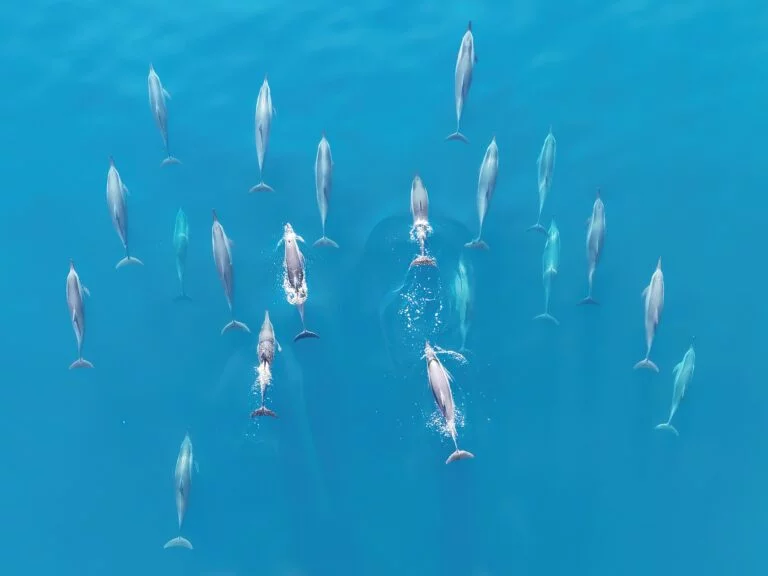
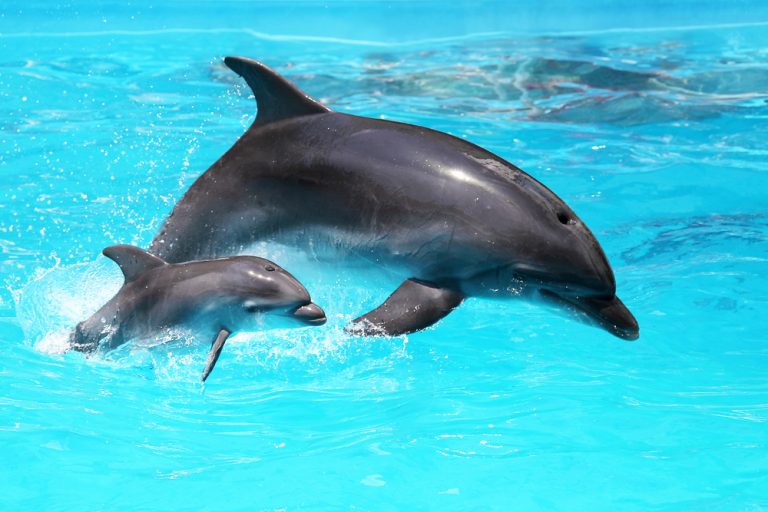
Naturally, dolphins exist in complex social groups called pods. The social organizations are so complex that they form lifelong bonds. Captivity alienates individual members of a pod, including babies that rely on the adults for most of their early life. At the dolphinarium, confinement in groups with other non-family member dolphins often results in what could have been avoidable conflicts.
A wild dolphin can swim up to 40 miles in a day 80 percent of that distance underwater. Certainly captive concrete pools can’t offer such freedom.
When you go down into the water and come in contact with a dolphin, there is a high chance that you might trade diseases, like Salmonella. Remember dolphins are born wild creatures and thus their primitive instincts, though trained, never go away. It’s not impossible that they might get aggressive and even “mark” you. You might also sustain broken bones, injuries, bruises or bites. Furthermore, fingernails and rings can bruise a dolphin’s delicate skin.
The Wild Is Better, Everytime
Though people can provide a certain degree of diversion and stimulation to a dolphin, it does not match up to the ocean life, claims Toni Frohoff, a marine scientist, and consultant for animal welfare groups. Captive dolphins have a lower survival rate than in the wild where they naturally communicate with their kind as they roam, hunt, mate, and play. Our piece on
whether keeping dolphins in captivity is right or wrong weighs the arguments. The pools themselves are part of the problem. Shallow resort enclosures give a dolphin no deep water to retreat into and little shade, and the chemicals used to keep the water clear are not what a marine mammal’s skin and eyes evolved for.
Regulations monitoring human-dolphin interactions are difficult to enforce
Courtney Vail, a campaigns and program manager at WDC, adds that interaction with humans can heighten anxiety. Rules and regulations governing dolphinariums exist in the Caribbean, but most dolphinariums work under the radar with no oversight. It’s not possible to control everyone that gets in the water with these dolphins. Some eager tourists are fond of harassing the creatures in a bid to take selfies and pictures. There are cases of swimmers lifting dolphins out of the water just to take pictures! One can only imagine what other indignities these marine mammals have to endure daily. The SWTD experience may have beneficial effects on you and you may actually have good intentions. However, to the dolphin, what goes on behind the scenes remains contested and will probably always be that way. So, will you decide to go swimming with dolphins or not?
Updated 25 October 2026: removed unsourced claims about where swim-with dolphins come from and what happens to rejected animals, and dated Diana McCaulay’s role.
Enjoyed this piece?
We send one careful dolphin roundup per month. Conservation news, species profiles, the occasional reader question we could not resist answering.
We never share your email. One-click unsubscribe.