

10 Cruel Facts About The Dolphin Captivity Industry
Arguments about dolphin captivity tend to run on feeling. This is the part that runs on record: where the industry came from, how the animals are taken, what the trade is worth, and what the law does and does not stop.
1. It is older than you think, and it started with belugas
Live cetacean display began in the nineteenth century, not the twentieth. P. T. Barnum was exhibiting beluga whales at his museum in New York in the 1860s, shipped down from the St Lawrence in tanks of seawater. They died quickly and were replaced.
The modern version starts in Florida. Marine Studios, later Marineland of Florida, opened on 23 June 1938, billed as the world’s first oceanarium, with a bottlenose dolphin as the main attraction. Everything that followed, from Flipper to SeaWorld, descends from that pool.
2. Orca capture is a 1960s invention
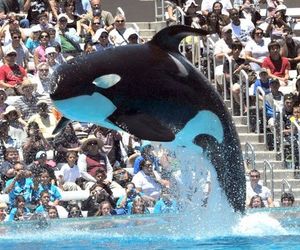
Keeping killer whales is much more recent than keeping dolphins. The practice of capturing and displaying orcas began in the 1960s, once a handful of accidentally caught animals showed the parks that the species could survive in a tank and draw a crowd. Within a decade it was an industry with boats, spotter planes and nets.
3. The capture process is violent, and the numbers are on record
The clearest example is Penn Cove, Puget Sound, in August 1970. Over 80 orcas were herded into the cove with boats and nets. Seven young animals were taken out and sold to marine parks around the world. Others drowned in the nets.
Across the capture era, between 1962 and 1977, 48 Southern Resident killer whales were captured or killed in British Columbia and Washington State. Thirty of them were immature. The population has never recovered from it, and stood at 76 animals in the provisional July 2026 census by the Center for Whale Research.
The last survivor of the Penn Cove capture was the orca known as Lolita or Tokitae. She spent 53 years at the Miami Seaquarium, the last 43 of them with no other orca after her tankmate Hugo died in 1980, and died there in August 2023, aged 57.
4. Japan’s drive hunts are the biggest source of wild-caught dolphins
In a drive hunt, boats form a line offshore and bang metal poles underwater to panic a pod towards land, closing it into a bay. Some animals are then selected alive for aquariums. The rest are killed for meat.
Taiji is the only town in Japan where this still happens at scale. For the 2023 financial year the Taiji drive-hunt quota was 1,824 animals, out of a national quota of 10,920 across every kind of small cetacean hunting. Actual catches have been lower than quota in recent seasons: 568 in the Taiji drive hunt in FY2022, and 492 in FY2023.
Those figures are worth holding onto, because inflated numbers circulate constantly in campaign material and they make the real ones easier to dismiss.
5. The live animals are the profitable part
Dolphin meat sells for very little. A live young dolphin suitable for a show tank sells for orders of magnitude more, which is why the selection happens before the killing and why the hunt survives despite collapsing domestic demand for the meat. Published prices vary widely by source and are hard to verify, so we are not going to quote a figure we cannot stand behind. The structure of the trade is the point: aquarium buyers underwrite it.
The 2009 documentary The Cove, directed by Louie Psihoyos, put Taiji in front of a global audience and won the Academy Award for Best Documentary Feature in 2010. Its central figure, Ric O’Barry, trained the five dolphins used in the Flipper television series before turning against the industry and founding the Dolphin Project in 1970.
6. The law has loopholes and always has
The US Marine Mammal Protection Act of 1972 made it illegal to take or harass marine mammals in American waters, and it is a genuinely strong law. It did not close the door on import and captive breeding, and other countries have nothing like it. For whether a private person can keep one, see our piece on owning a dolphin in the USA.
CITES regulates international trade in cetaceans, but the level of protection depends on which appendix a species sits in and on how individual states interpret it. A dolphin that cannot legally be caught in one country can often be bought from another.
The International Whaling Commission moratorium on commercial whaling took effect in 1986. It covers the great whales. It has never covered dolphins and small cetaceans, which is precisely why the drive hunts are legal.
7. Transport kills some of them
A dolphin out of water is carrying its own weight on a skeleton that evolved to be weightless. It has to be supported in a sling, kept wet, and kept cool, sometimes for a day or more across time zones. Deaths in transit and in the first weeks after arrival are a known part of the trade, and shock, injury and pneumonia are the usual causes.
8. The educational case has never been demonstrated
Parks argue that display animals teach the public and support research. There is no good evidence that watching a dolphin perform trained behaviours changes what anyone does afterwards, and the research output from show pools is thin compared with what long-term field studies produce.
The other standard argument is that the animals breed, so they cannot be stressed. Captive cetacean breeding programmes rely heavily on artificial insemination, which weakens the claim considerably.
9. Confinement shows in their behaviour
Captive dolphins and orcas break and wear down their teeth on concrete and steel, swim repetitive circuits for hours, act aggressively towards tank mates in ways rarely seen in wild groups, and carry infections that are uncommon in the wild. We go through this in detail in our piece on the signs of stress in captive dolphins.
The most public consequence was the death of SeaWorld trainer Dawn Brancheau in February 2010, killed by the orca Tilikum. Tilikum had been linked to two earlier human deaths. There is no confirmed record of a wild orca ever killing a person.
10. It is still legal in most of the world
About 53 to 55 orcas were in captivity worldwide as of April 2026, 16 of them in SeaWorld parks, and roughly two-thirds of the total were born in tanks rather than caught. SeaWorld ended orca breeding in 2016, so its population will age out rather than be replaced. The much larger global population of captive bottlenose dolphins is not ageing out, because it is still being restocked.
What you can do
- Do not buy a ticket. Attendance is the only number the parks respond to.
- Do not book a swim-with-dolphins excursion on holiday, including the ones attached to hotels.
- Support the organisations documenting the drive hunts and the captive trade, and the ones campaigning for seaside sanctuaries for retired animals.
- Push your own government on import rules, which is where most countries are weakest.
For the broader picture, see our dolphin facts guide.
Updated 25 October 2026: corrected Tokitae’s age and time alone, and updated the Southern Resident census and captive orca counts.


The ‘they live longer in captivity’ line still comes up every time I argue about this with friends.
It does keep coming up. Lifespan is only one part of it though. Most of the post is about how the animals live, and that part is harder to argue away.