
The Secret Life Of Dolphins: Into A Pod When No One’s Looking
Dolphins are famously sociable around people. But how do they behave when nobody is watching?
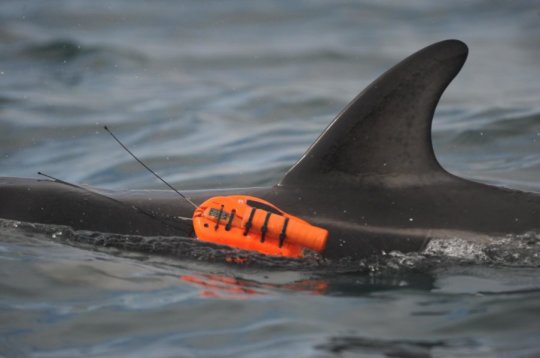
One Of The Dusky Dolphins With Suction Camera Attached (Photo: University Of Sydney)
Dolphins spend the overwhelming majority of their lives underwater and out of sight, which makes almost everything we know about them a surface-level account. A team of researchers set out to fix that by putting the camera on the animal instead of the boat.
What the cameras were for
Working off Kaikoura on New Zealand’s South Island, the team attached small suction-cup cameras to wild dusky dolphins and recorded close to nine hours of underwater footage. The results were published in the journal Marine Biology.
The footage captured behaviour that had rarely been seen from the surface: mothers interacting with their calves, animals playing in kelp, and unusual displays of contact between pod members, including a habit of rubbing flippers together.
The work was led by Dr Gabriel Machovsky-Capuska of the University of Sydney’s Charles Perkins Centre, with co-authors including Heidi Pearson of the University of Alaska Southeast. Machovsky-Capuska’s point about method was that no invasive underwater housings or dive crews were needed, and the dolphins showed no sign of being affected by the tags.
Getting a camera onto a dusky dolphin
Attaching them was the hard part. Dusky dolphins are small compared with orcas or common bottlenose dolphins, and they are fast, so getting close enough from a bobbing boat was difficult. Their size also means limited surface area to work with and a very short window to place the tag as the animal passes. The team managed it with suction cups on long poles.
“For the first time, these cameras have given us the opportunity to see what dolphins do on their own terms,” Machovsky-Capuska said.
Why it matters beyond curiosity
Seeing what dolphins do unobserved is interesting on its own, but the conservation case is more concrete.
- It shows the challenges the animals face in their own environment, rather than the ones we infer from a boat.
- In areas with heavy human activity, such as shipping routes and tourism hotspots, footage can pinpoint how that activity actually affects behaviour.
- It gives a better read on the health of the wider marine environment, including the fish and squid stocks that both dolphins and people depend on.
The more of this data there is, the better the picture of how our own activity shapes a dolphin’s ability to feed, grow, mate, and raise young.
Continue exploring at our store
If this article sparked your interest, head over to the We Love Dolphins merchandise store for related reads and gear.
For the broader picture, see our full dolphin facts guide.



Amazing the things they do to learn more! It’s going to be wonderful to see what can be learned and what can be done to help them!