
Dolphin vs Porpoise: How to Tell Them Apart
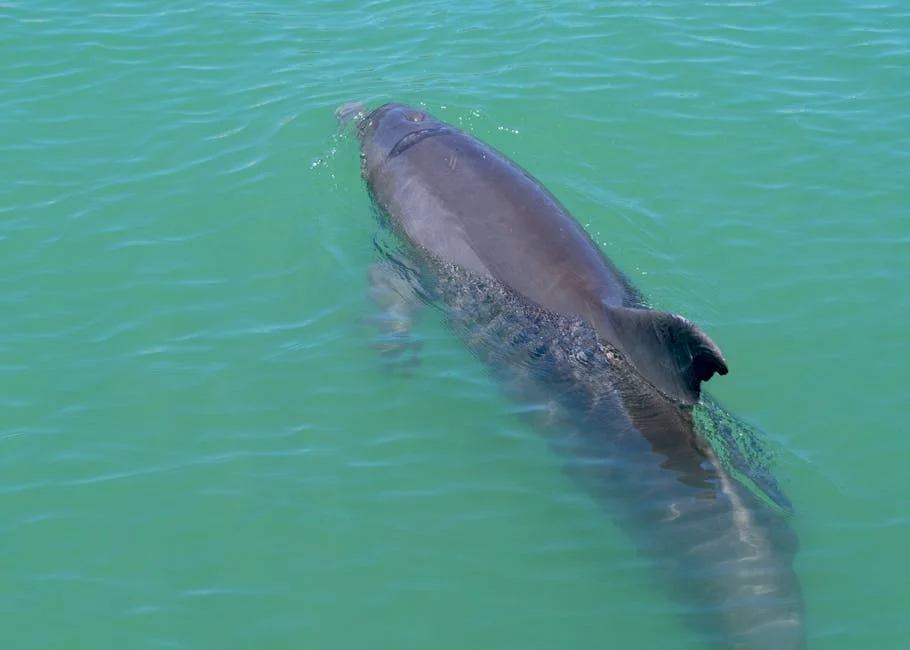
Photo by Alexa Heinrich on Pexels.
Dolphin and porpoise get used as if they mean the same thing. They do not. These are two different families of toothed whale that parted company tens of millions of years ago, and they differ in teeth, fin shape, size, behaviour and social life. Once you know the tells, you can separate them from a moving boat.
Family-level differences
Dolphins are the oceanic family Delphinidae, close to forty species strong, plus several river-dolphin lineages that sit outside it. The range inside that group runs from small coastal animals to the orca.
Porpoises are Phocoenidae, and there are seven of them: the harbour porpoise, the vaquita, Burmeister’s porpoise, the spectacled porpoise, the Indo-Pacific finless porpoise, the narrow-ridged finless porpoise and Dall’s porpoise. A family a fifth the size, in waters people visit less. That is most of why you see them less often.
Teeth
Teeth are the definitive difference. A dolphin’s are conical, good for gripping fast slippery prey, and the shape holds right across the family. A porpoise’s are spade-shaped with flattened tips, suited to smaller and often bottom-dwelling fish.
You will essentially never see this at sea. It settles the question on a stranded animal or a museum specimen.
Body shape and dorsal fin
This is the useful test on a live animal. Most dolphins have a curved, swept-back dorsal fin and a clearly projecting beak.
Porpoises have a small triangular fin and no beak worth the name: the head is short and rounded, the mouth set into a curved face. A triangular fin and a blunt head surfacing briefly is a porpoise. A long beak and a hooked fin is a dolphin.
Size
Dolphins cover a huge size range. At the bottom, Hector’s dolphin and its Māui subspecies in New Zealand top out around 1.5 m. At the top, the orca, largest member of the dolphin family despite the name killer whale, exceeds 9 m.
Porpoises are smaller and far less variable. The vaquita, at 1.4 to 1.5 m, is the smallest cetacean on Earth. Dall’s porpoise, the largest of the family, reaches only about 2.3 m. So the smallest dolphins and the largest porpoises do overlap, but no porpoise comes near the size of a large dolphin.
Social structure and behaviour
Dolphins live in larger and more fluid groups, sometimes hundreds or thousands of animals. They are noisy and acrobatic, they use individually specific signature whistles that work like names, and they leap, surf and bow-ride.
Porpoises are quieter and more reserved. They are usually alone or in groups of two to four, they rarely leap, and they surface with a brief low roll. A harbour porpoise is easy to miss precisely because it does so little at the surface. If a small cetacean is putting on a show, it is a dolphin.
Lifespan
Dolphins are relatively long-lived, most species reaching 20 to 50 years, and orcas going considerably further, with some wild females estimated into their eighties.
Porpoises live shorter lives. A harbour porpoise typically manages 10 to 20 years and Dall’s porpoise around 22. Short lives plus small groups is why porpoise populations can crash faster under a new pressure such as a change in fishing gear.
Quick field checklist
- Beak: visible beak is a dolphin, blunt head is a porpoise.
- Dorsal fin: curved and swept back is a dolphin, small triangle is a porpoise.
- Behaviour: leaping, bow-riding and big groups is a dolphin; quiet low rolls in twos and threes is a porpoise.
- Size: anything over about 2.5 m is a dolphin.
Why the distinction matters
Several porpoises are in serious trouble. The vaquita is the most endangered marine mammal in the world, and its decline is almost entirely due to entanglement in illegal gillnets. Observers on the September 2025 survey in the upper Gulf of California saw 7 to 10 different vaquitas (6 to 8 in 2024). That is a minimum count of animals seen, not a population total. Knowing that porpoises are a small, separate and more vulnerable family makes those stories legible.
Frequently asked questions
Is a porpoise a dolphin?
No. Both are toothed whales, but they sit in different families that diverged tens of millions of years ago.
How do I tell them apart at sea?
Beak, fin shape and behaviour, in that order. Beak and hooked fin means dolphin; blunt head and triangular fin means porpoise; acrobatics mean dolphin.
Are orcas dolphins or whales?
Orcas are the largest member of the oceanic dolphin family. They are dolphins, despite the common name.
What is the smallest cetacean?
The vaquita (Phocoena sinus), at 1.4 to 1.5 m. It is also the most endangered.
Are dolphins smarter than porpoises?
Dolphins have larger brains relative to body size, and the well-known cognitive results (mirror self-recognition, tool use, complex social learning) all come from dolphins. That partly reflects where the research money has gone: porpoises are far less studied.
Do they ever swim together?
They share water but do not form mixed social groups. Porpoises tend to avoid bottlenose dolphins, which have been recorded attacking and killing them.
Read next
Updated 25 October 2026: corrected the adult length of Hector’s and Maui dolphins.
Updated 16 November 2026: linked the vaquita figure to the September 2025 survey (7 to 10 animals seen, a minimum count).
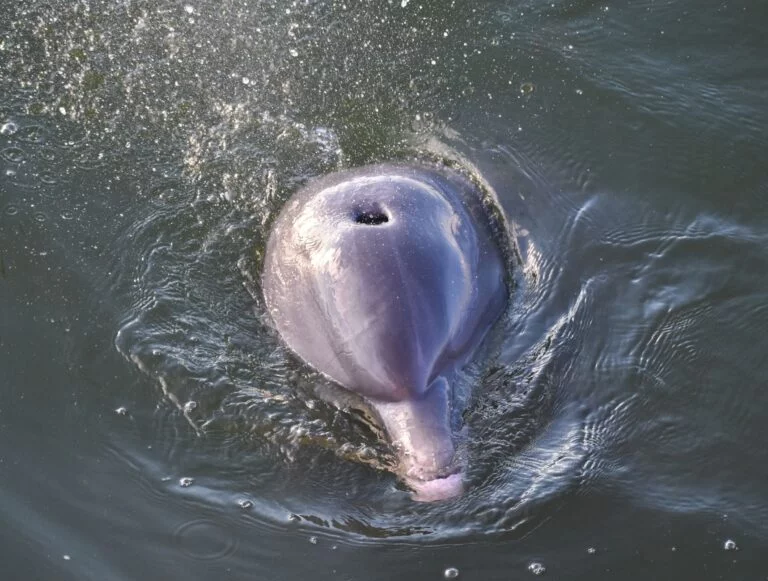




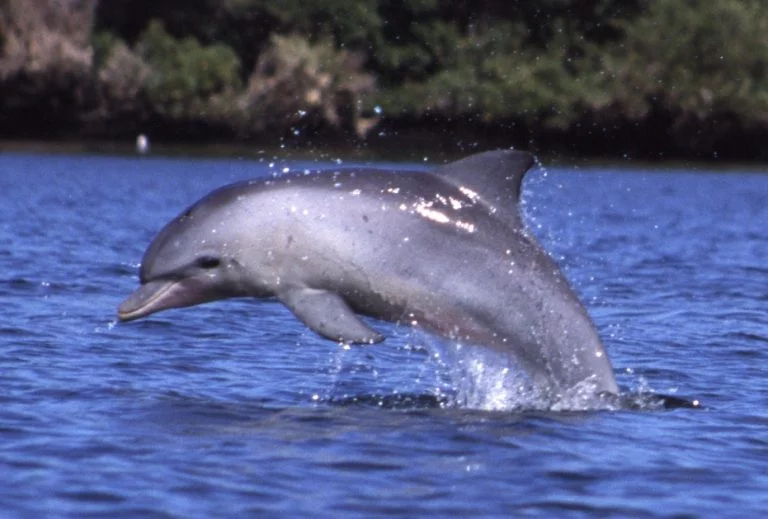
So the porpoises I keep seeing off the beach here aren’t dolphins at all. I’ve been calling them dolphins for years.