
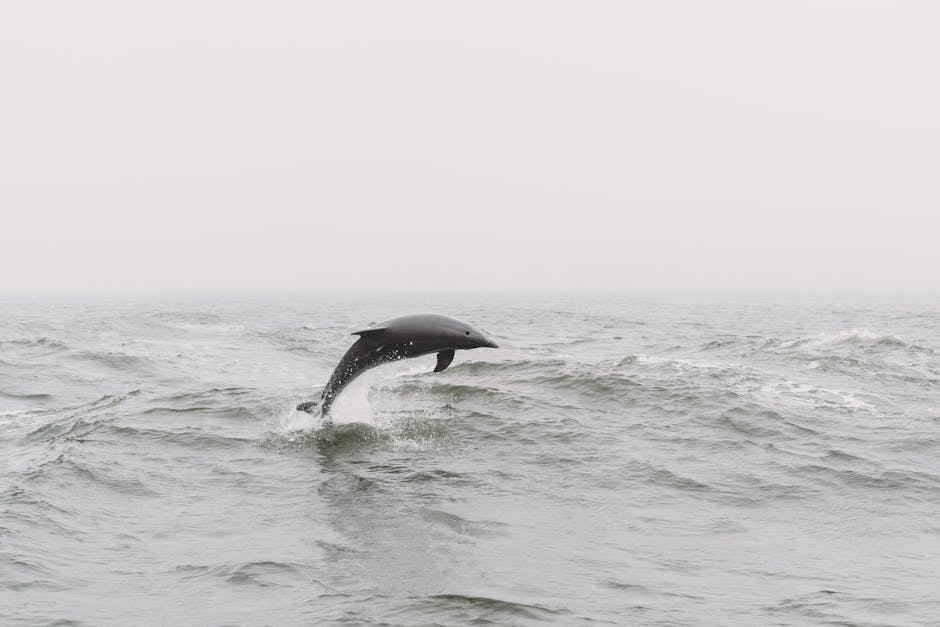
Risso’s Dolphin: The Scarred White Dolphin Explained
Risso’s dolphin (Grampus griseus) is one of the most easily recognised dolphins at sea: large, blunt-headed, and covered in pale scars that build up over a lifetime. Old individuals can look almost entirely white. It is the only living member of the genus Grampus and occupies deep offshore water in temperate and tropical seas worldwide. Georges Cuvier described the species in 1812 from notes made by the naturalist Antoine Risso, whose name it still carries.
Identification
Risso’s dolphins reach around 4 m and up to about 500 kg, which puts them among the largest members of the oceanic dolphin family. The body is heavy through the shoulders and tapers sharply toward the tail. The forehead is tall and bulbous, and it carries a distinctive vertical crease running down the front of the melon, a feature found in no other dolphin and one of the quickest ways to confirm an identification at sea.
The other giveaway is colour. Calves are born a fairly uniform dark grey, sometimes almost chocolate brown. As an animal ages, the skin lightens and steadily accumulates a tangle of white scratches. By full maturity many Risso’s dolphins look heavily marbled, and the oldest can appear ghostly white from a distance, especially around the head and back. Unusually for a dolphin, Risso’s dolphins have no teeth in the upper jaw and only two to seven pairs in the lower jaw, an adaptation to a diet that does not need gripping rows of teeth.
Why Risso’s dolphins are so scarred
Those white marks are the species’ signature, and they come from two sources. Most are rake marks: shallow parallel scratches left by the teeth of other Risso’s dolphins during social contact and competition, much of it between males. Because the scars heal pale and the skin does not re-pigment, every interaction is effectively recorded on the body. The rest of the scarring comes from prey, chiefly the beaks and suckers of the squid the dolphins hunt. A heavily scarred Risso’s dolphin is simply an old, well-travelled one, and researchers can use individual scar patterns, much like fingerprints, to recognise the same animal year after year.
Range and habitat
Risso’s dolphins are found globally in temperate and tropical waters, roughly between 60 degrees north and 60 degrees south. They are creatures of the continental shelf edge and slope, typically favouring water 400 to 1,000 m deep where the seabed drops away steeply. That preference for deep, productive water means they are rarely seen close inshore.
Recognised strongholds include the Bay of Biscay, the Hellenic Trench in the Mediterranean off Greece, the waters off California and Hawaii, the deep channels east of Taiwan, and southern Australia. They also turn up regularly along the shelf edge off the British Isles, and in Wales mainly off Pembrokeshire and around Bardsey Island.
Behaviour and diet
Risso’s dolphins are squid specialists. They feed almost exclusively on cephalopods, hunting at depth and often at night, when many squid species migrate upward toward the surface. This nocturnal, deep-diving habit is why daytime sightings often show animals resting or socialising at the surface rather than actively feeding.
Group sizes usually range from a handful of animals to around 50. In rich feeding areas, larger aggregations of several hundred are occasionally reported. They are also notably sociable across species lines, frequently seen in mixed pods with pilot whales and bottlenose dolphins, and even known to interact and travel with them. At the surface they breach, spyhop, and slap their tails and flippers, all behaviours that make a pod easy to spot once you know what to look for.
Conservation status
The species is listed as Least Concern by the IUCN globally, on the basis of a wide range and a reasonably large total population. That global label hides regional concern, though, and some local populations are flagged as data-deficient or vulnerable because so little is known about them.
Known threats include drive hunts in Japan, where Risso’s dolphins are among the species taken at Taiji, bycatch in gillnets across many regions, vessel strikes in busy shipping lanes, and underwater noise from seismic surveys and naval sonar that can disrupt the deep-diving foraging the species depends on. Plastic ingestion has also been recorded in stranded animals. Our piece on microplastics and dolphins covers what the research shows.
Where to see them
Risso’s dolphins are a rewarding target for whale-watchers who venture toward deeper water. Monterey Bay in California and the Pico-Faial channel of the Azores both offer reliable late-summer encounters, helped by submarine canyons that bring deep water close to shore. The Bay of Biscay ferries between Plymouth and Santander are a classic shelf-edge viewing platform, crossing prime Risso’s habitat on a single voyage.
Dedicated wildlife operators also run trips from Newport in California, Kona in Hawaii, and Pembrokeshire in Wales. For the best chance, choose a trip that heads out over the shelf edge and look for the pale, blunt-headed shapes that set this scarred dolphin apart from every other.
Read next
Frequently asked questions
Why is Risso’s dolphin so scarred?
Most scars are rake marks left by the teeth of other Risso’s dolphins during social interaction and competition. Others come from squid beaks and suckers during feeding. The scars heal pale and the skin does not re-pigment, so they build up for life.
How big is a Risso’s dolphin?
Around 4 m and up to about 500 kg, making it one of the largest dolphin species.
Where is the best place to see Risso’s dolphins?
Monterey Bay in California, the Azores and the Bay of Biscay all have reliable populations along the deep shelf edge. In Wales, Bardsey Island is one of the few places where they regularly come close to shore.
Are Risso’s dolphins endangered?
Globally Least Concern, but several regional populations face pressure from bycatch and drive hunts.
What do Risso’s dolphins eat?
Almost exclusively squid, hunted at depth, often at night when squid rise toward the surface.
Updated 25 October 2026: corrected where Risso’s dolphins are seen in Wales.

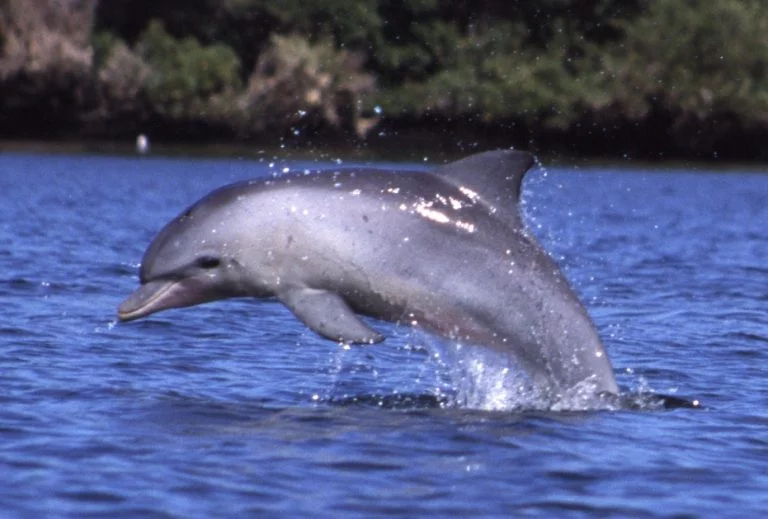

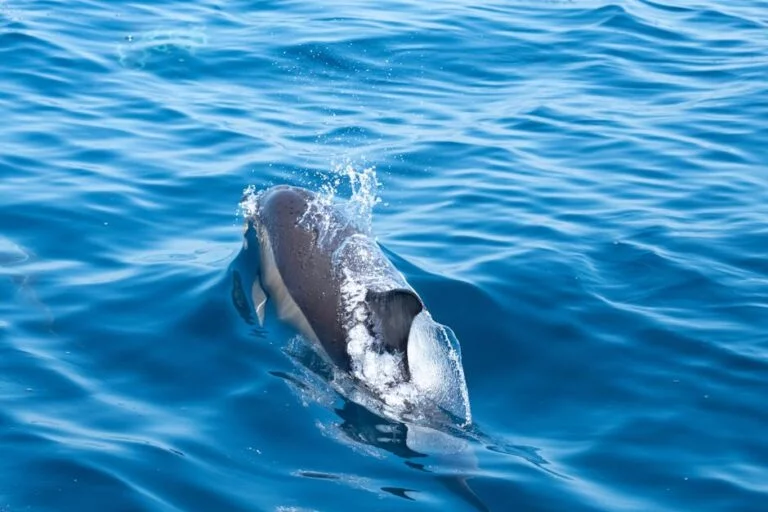

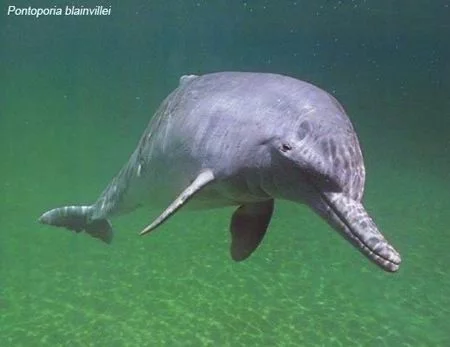
The scars are something else. Wild that every scrape just stays on them for life.