Extinct Freshwater Dolphin Skull found in Peru
Scientists working in the Peruvian Amazon found the fossilised skull of an extinct river dolphin that lived around 16 million years ago and grew to roughly 3 to 3.5 metres long, making it the largest river dolphin ever known. The species was named Pebanista yacuruna, and its closest living relatives are not in the Amazon at all but in the rivers of South Asia, roughly 10,000 kilometres away. This page keeps the account of that find and explains the lost world the dolphin lived in, why it died out, and what its story means for the river dolphins still alive today.
For the broader picture, see our dolphin conservation guide.
A giant skull from a vanished river system
The fossil was collected in 2018 from the banks of the Rio Napo in Loreto Province, Peru, by a team that included Aldo Benites-Palomino of the Department of Palaeontology at the University of Zurich. Publication was delayed by the pandemic, and the species was formally described in Science Advances in 2024.
The skull alone told researchers this was no ordinary river dolphin. At an estimated 3 to 3.5 metres, Pebanista was substantially larger than any river dolphin alive today. After two decades of turning up giant fossil forms across South America, this was the first dolphin among them.
The Pebas: a lost world of lakes and swamps
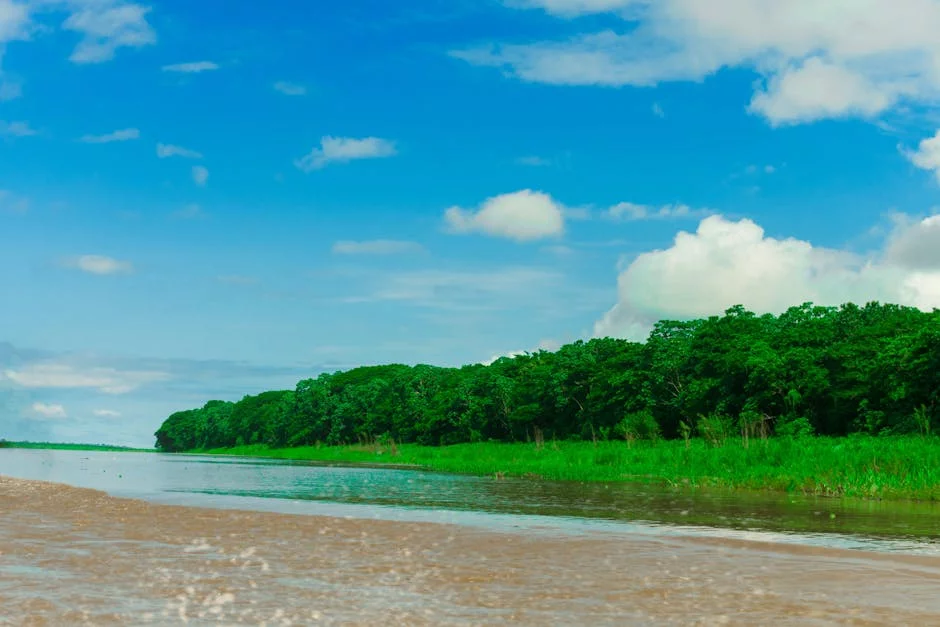
Pebanista did not swim in the Amazon River as we know it. Sixteen million years ago, much of the Amazonian plain was covered by an enormous system of lakes, swamps and wetlands known as the Pebas, holding both fresh and brackish water. It stretched across what is now Colombia, Ecuador, Bolivia, Peru and Brazil: an inland wetland rather than the river-and-rainforest landscape of today.
That environment supported a strange assemblage of giant animals, and Pebanista was part of it. The dolphin was a top predator of these waters, using echolocation to hunt in murky, sediment-heavy water just as river dolphins do now.
Why the giant dolphin went extinct
Around ten million years ago, the Pebas system changed. As the Andes continued to rise and the modern Amazon drainage took shape, the old wetlands drained and transformed. That shift wiped out the prey Pebanista depended on. With its food gone, the giant river dolphin could not survive. Its disappearance is a clean example of how a predator’s fate is tied to its ecosystem: change the habitat enough, and the animal at the top falls with it.
A relative on the other side of the world
One of the most striking findings is where Pebanista‘s family tree leads. Its closest living relatives are not the pink Amazon river dolphins that share its old territory. They are the South Asian river dolphins of the Ganges and Indus, genus Platanista, thousands of kilometres away. The modern Amazon river dolphin descends from a separate cetacean lineage that moved into South American rivers independently.
This tells a deeper story. River dolphins are not a single closely related group. They are several different dolphin lineages that each adapted, separately, to life in fresh water, often developing similar features: long narrow snouts packed with teeth, flexible necks, small eyes, and heavy reliance on echolocation in murky water. Pebanista is a branch of one of those lineages that survives today only in Asia.
What the name Pebanista yacuruna means
The name itself tells the story. Pebanista refers to the Pebas, the ancient wetland system the dolphin lived in. The species name yacuruna comes from Quechua mythology of the Peruvian Amazon: the yacuruna are water people said to live in hidden underwater cities in the rivers. Naming a vanished river giant after legendary river dwellers ties the science to the cultures that have shared these waters for thousands of years, and it is a reminder that the Amazon’s rivers have always been imagined as full of unseen life.
Digging in the Amazon is a race against the river
The Amazon is rich in fossils but brutal to work in. Palaeontologists can only dig during the dry season, when river levels drop and expose the fossil-bearing rock. If a specimen is not collected in time, the rising water of the rainy season washes the evidence away. That seasonal window is part of why discoveries like Pebanista are so rare and so valuable.
Why this matters for living river dolphins
The ending of Pebanista‘s story is a warning, not just history. The river dolphins alive today are again under serious threat. The baiji, or Yangtze river dolphin, was declared functionally extinct in 2006. The Amazon river dolphin was moved to Endangered on the IUCN Red List in 2018, and the South Asian river dolphin faces dams that fragment its rivers, entanglement in fishing nets, pollution and falling water levels driven by drought.
Pebanista shows that river dolphins have disappeared before when their habitat collapsed. The difference now is that the habitat change is largely human-driven, which means it can also be slowed. To learn more about Pebanista‘s living cousin, see our profile of the South Asian river dolphin.
Continue exploring at our store
If this article sparked your interest, head over to the endangered status of dolphins guide at the We Love Dolphins store for related reads and gear.