Types of Dolphins: Families, Groups and River Species
Ask how many kinds of dolphin there are and the answer depends on who is sorting. The Society for Marine Mammalogy keeps the standard list, and its taxonomy committee updated it in April 2026. Its list of marine mammal species puts 38 species in the true oceanic dolphin family, Delphinidae. Five more animals get called dolphins because they live in rivers, and they sit in four separate families of their own.
This guide walks through the groups so a name like “Risso’s dolphin” or “boto” has a place to land. It will not replace a species profile, but it shows how the pieces fit.
The oceanic dolphins: 38 species in one family
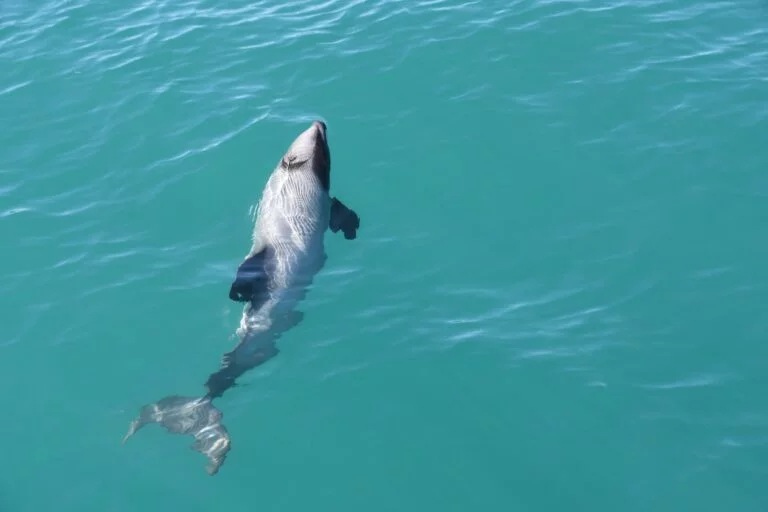
Delphinidae is the big one. The family runs from small species such as Hector’s and Māui dolphins, whose adults are about 1.5 metres long, with the largest females reaching about 1.7 metres and 50 kilograms according to New Zealand’s Department of Conservation, up to the orca at 9.4 metres and around 10 tonnes, according to the Wikipedia entry on oceanic dolphins. Most members have a beak, a curved dorsal fin and 100 to 200 teeth, though a few species break each of those rules.
The society’s list groups many of those 38 species into genera. The bigger ones are worth knowing:
- Stenella, five species: pantropical spotted, Clymene, striped, Atlantic spotted and spinner dolphins.
- Cephalorhynchus, six small, rounded-fin species from cool southern waters: Peale’s, Commerson’s, hourglass, Chilean, Heaviside’s and Hector’s dolphins.
- Sousa, four humpback dolphins, named for the fatty hump under the dorsal fin of some.
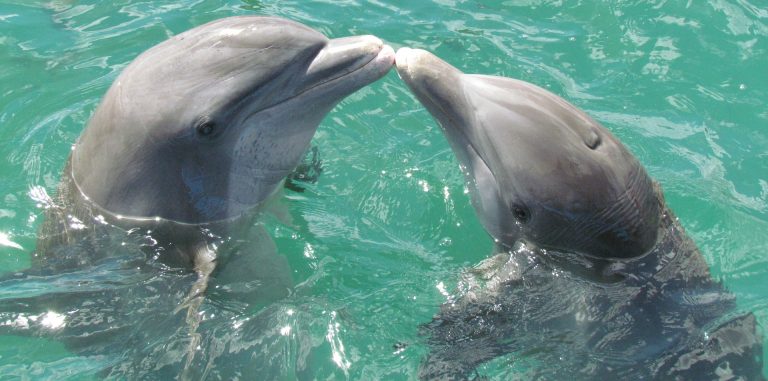
- Tursiops, three bottlenose species: the common bottlenose, the Indo-Pacific bottlenose and Tamanend’s bottlenose dolphin.
- Pairs: two Orcaella (the Irrawaddy and Australian snubfin), two right-whale dolphins, two Sotalia (the tucuxi and Guiana dolphin), two pilot whales and two Aethalodelphis (the Pacific white-sided and dusky dolphins).
The rest sit alone in their genus, including the common dolphin, Risso’s dolphin, Fraser’s dolphin and the rough-toothed dolphin. If you want a close look at the best known one, start with our common bottlenose dolphin profile.
The list also tracks subspecies, which adds another layer. It gives the common dolphin four: the eastern Pacific long-beaked, the common, the Black Sea and the Indo-Pacific common dolphin. Hector’s dolphin has two, the South Island Hector’s dolphin and the Māui dolphin. The Chinese humpback dolphin shares its species with a Taiwanese subspecies. So “how many types” can mean species, subspecies or just the groups above, and each answer gives a different number.
The “whales” that are really dolphins
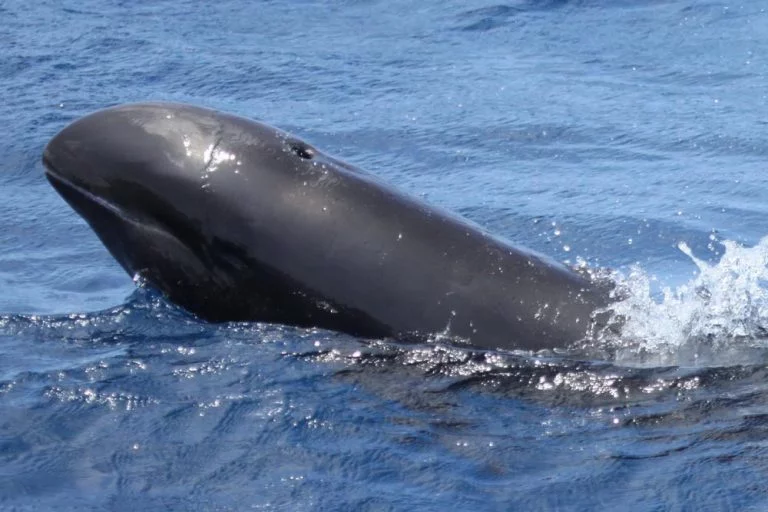
Six Delphinidae species carry “whale” in their common names: the orca, the false killer whale, the pygmy killer whale, the melon-headed whale and the two pilot whales. Wikipedia notes that scientists classify all six as oceanic dolphins. NOAA Fisheries states it directly: the killer whale is the largest member of the dolphin family.
Our posts on the orca and on the largest dolphins also called whales go deeper.
River dolphins: five species, four families
River dolphins are not one family. Wikipedia calls them a polyphyletic group, meaning they do not share a single recent ancestor that excludes all the other dolphins. Several lines moved into fresh water or estuaries on their own. The society’s list shows the split:
- Platanistidae: the Ganges river dolphin and the Indus river dolphin.
- Iniidae: the Amazon river dolphin, or boto.
- Pontoporiidae: the franciscana of South America’s Atlantic coast.
- Lipotidae: the baiji, listed as “possibly extinct”.
Sizes vary. Female Ganges river dolphins reach about 2.6 metres and males about 2.2 metres (Marine Mammals of the World). The boto is the largest living river dolphin: males reach about 2.55 metres and 207 kilograms, averaging 2.32 metres and 154 kilograms (Animal Diversity Web). The same Wikipedia entry says river dolphins have little to no blubber, unlike other cetaceans. Murky water favours echolocation over sight.
The baiji is the sad one. A six-week survey in November and December 2006 found none and declared it functionally extinct, a story we cover in Is the Yangtze river dolphin extinct or not?. You can read about the boto in our Amazon river dolphin profile.
Porpoises, belugas and beaked whales are not dolphins
A few relatives get mixed up with dolphins. The society lists seven species of porpoise in their own family, Phocoenidae. Porpoises share the superfamily Delphinoidea with the oceanic dolphins and with the Monodontidae, which holds the beluga and the narwhal. The list also has 24 beaked whale species in the Ziphiidae, a separate family again. Our dolphin versus porpoise guide covers the visible differences.
Why the list keeps changing
Dolphin taxonomy is not finished. Wikipedia reports that molecular analyses indicate several genera, especially Stenella, are not monophyletic as currently defined, and that a significant revision of the genus Lagenorhynchus happened in 2025. That change is why the Atlantic white-sided dolphin now appears under the name Leucopleurus acutus on the society’s list.
So a species count is a snapshot. The 38 in this guide is the April 2026 figure. Expect it, and some scientific names, to move as more genetic work comes in.
Have you met a dolphin from one of these groups in the wild? Tell us what you saw in the comments.
Sources
- Society for Marine Mammalogy, List of Marine Mammal Species and Subspecies
- Wikipedia, Oceanic dolphin
- Wikipedia, River dolphin
- NOAA Fisheries, Killer Whale
Photo: Giles Laurent, CC BY-SA 4.0, via commons.wikimedia.org.
Updated 16 November 2026: brought the river dolphin and Māui dolphin sizes into line with our species profiles and linked their sources.