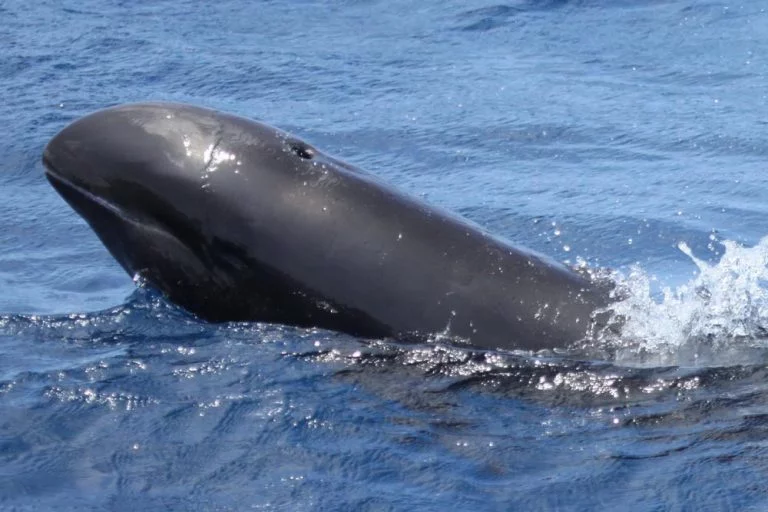
How Scientists Tell How Old a Dolphin Is
A dolphin has no birth certificate, no rings like a tree and no grey hair. Yet when a headline says a bottlenose dolphin lived to 67, someone had to work out that number. Sometimes the answer is a researcher who was there the day the animal was born. When that is not possible, the answer is often a tooth.
Age matters well beyond curiosity. It tells scientists how fast a population breeds, how long animals survive and whether a group is healthy. It also decides whether a claim about a record-breaking old dolphin is believable.
The gold standard: watching from birth
The most reliable age is one nobody has to estimate. Researchers with long-running photo-identification projects recognise individual dolphins from photographs and record them from calfhood. A 2020 paper in PLOS ONE calls this the gold standard: building an observational life history for each animal from birth.
The catch is that very few populations have such a record. In Sarasota Bay, Florida, the resident bottlenose dolphins have been followed for decades, so many are of known age because they were watched from birth with known resident mothers, as described in a 2025 life-history study in Frontiers in Marine Science. Almost everywhere else, nobody has been watching long enough. For those dolphins, and for animals found stranded, scientists need another way to read age.
Reading the tooth
The longest-established method is to look inside a tooth. A dolphin tooth grows by adding thin layers as the animal ages. Researchers cut a thin section through the length of an extracted lower jaw tooth, stain it and count the repeating bands, which they call growth layer groups. The 2023 Frontiers study led by Ashley Barratclough describes this as the longest-established technique for bottlenose dolphins.
It works on stranded animals because the tooth can be taken after death. It has also been used on living dolphins. In Sarasota Bay, if a dolphin was of unknown age, a tooth was taken under local anesthesia by a veterinarian so its growth layers could be examined. The same study notes that only three of those tooth ages date from after 2011, as less invasive techniques became available.
Those tooth ages stay useful for years afterwards. Take the oldest female in the Sarasota dataset, known as FB15. Her tooth suggested she was 34 when first sampled in 1984. Researchers then kept watching her for another 33 years, which is how she reached the recorded age of 67. The oldest male, F154, was sampled at 28 and watched for another 24 years, reaching 52. A tooth gave the starting point, and patient observation did the rest. You can read more about how long bottlenose dolphins live in our post on the oldest bottlenose dolphin.
Counting without a tooth
Pulling a tooth from a living animal is not something anyone wants to do routinely. Two less invasive options have been developed for dolphins briefly restrained during health assessments.
- Dental radiography. The 2020 PLOS ONE paper describes taking X-rays of a tooth in the mouth and measuring the ratio of the soft pulp cavity to the whole tooth. The authors applied it to bottlenose dolphins caught and released for health checks in the Gulf of Mexico. It gives a same-day answer, and the authors say it is reliable for dolphins up to about 10 years old.
- Flipper radiography. Scientists X-ray the bones of the pectoral flipper and score how far the growth plates have fused, and in older animals how much joint degeneration shows. The Sarasota paper lists flipper bone fusion among the newer methods used for the few animals of unknown age.
Each method fits a different job. A tooth section can be read on a stranded carcass months later. A dental X-ray gives a same-day answer in the field. The flipper X-ray works well while the bones are still changing.
Why old dolphins are the hard ones
Here is the problem researchers keep running into. The Barratclough team tested both the tooth method and the flipper method on dolphins aged from newborn to 58, with most samples from animals over 16. Both methods did well in young dolphins and badly in old ones.
- For dolphins 15 or younger, the typical error was about 1.5 years either way: 1.46 years for tooth layers and 1.58 years for flipper radiographs.
- For dolphins over 30, the typical error rose to 17 years for tooth layers and 8.25 years for flipper radiographs.
- For individual animals the tooth method missed by as much as 37 years.
The authors give several reasons. In very old dolphins the newest layers are hard to see after sectioning and staining. Extra layers can appear, the layers can be compressed around the pulp cavity, and wear or tooth curvature can remove the earliest layer that the count starts from. For the flipper method, a good straight-on X-ray is hard to get from a live dolphin, and scoring old joints is a judgement call. Two dolphins in human care, aged 57 and 58, were used to show the problem. The 57-year-old female looked younger on the X-ray because she had few degenerative changes.
The authors also point out that earlier checks of the tooth method used mostly dolphins under 16, because few older animals have a known age. So the method was proven where it matters least for headline records.
What this means for big age claims
An old dolphin with a tooth age alone is a weaker claim than one watched from birth. The Sarasota record holders are convincing because of the decades of sightings behind them, not because of a single tooth. The same caution applies to a stranded animal that someone says was 70. Unless its life was documented, the age is an estimate with an error bar that grows with every decade.
It also changes how to read lifespan figures. Numbers from well-watched populations like Sarasota are strong. A figure that rests on a tooth count alone gets shakier the older the animal is. For related reading, see our look at why dolphins strand.
What is still unknown
No single method gives a precise age for a very old wild dolphin. The sources above describe tooth layers, dental X-rays and flipper X-rays, and each has a range where it holds up. Researchers are still testing methods against animals of known age, and known-age old dolphins remain rare. That is why long-term photo-identification projects are so valuable: they are the only thing the other methods can be checked against.
Have you seen a long-term dolphin study in your area, or know of one? Add what you know in the comments.
Sources
- Barratclough et al. 2023, How to estimate age of old bottlenose dolphins by tooth or pectoral flipper? Frontiers in Marine Science
- Herrman et al. 2020, Age determination of common bottlenose dolphins using dental radiography pulp:tooth area ratio measurements, PLOS ONE
- Sarasota Bay bottlenose dolphin life history, Frontiers in Marine Science 2025
Photo: Bramans, CC BY-SA 4.0, via commons.wikimedia.org.