Dolphin Pods: What Are They Really All About?
Dolphins are almost never alone. The group they travel in is called a pod, and the pod is how they hunt, how they raise calves, how they avoid being eaten, and in some species how they carry knowledge from one generation to the next.
How big is a pod?
Most of the time, small. Bottlenose dolphins commonly live in groups of up to about a dozen, and adult females with dependent calves form the most stable units. Adult males are often alone or in bonded pairs.
Where food is concentrated, groups merge. A hundred animals is unremarkable. Superpods of over a thousand happen, and a few species do it routinely: dusky dolphins off Kaikoura, common dolphins in the eastern Pacific. These are temporary. When the fish are gone, the superpod comes apart again into the small units that make it up. For what dusky dolphins do once researchers get a camera on them, see the secret life of dolphins in a pod.
The main kinds of group
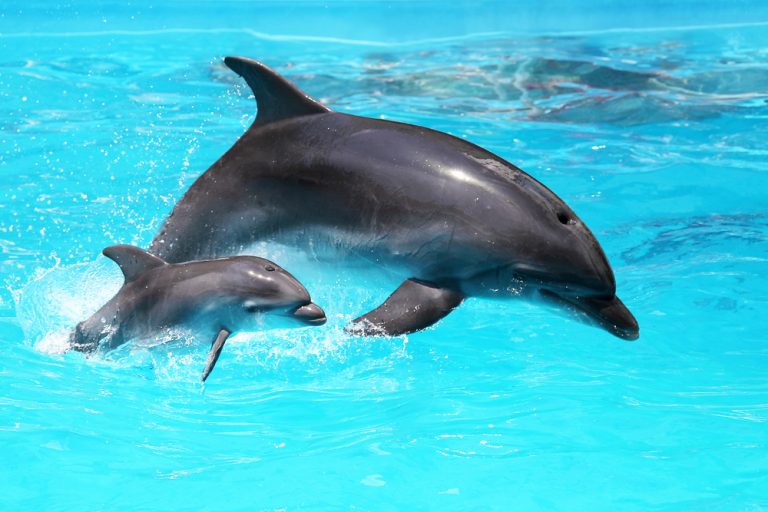
- Nursery groups. Mothers and calves. The tightest and longest-lasting association in most dolphin societies, and where a calf learns to hunt.
- Juvenile groups. Young animals that have left their mother but are not breeding yet, mixing with others of a similar age.
- Male alliances. Pairs or trios of adult males that cooperate, sometimes for many years. In Shark Bay in Western Australia these alliances themselves form alliances, which is unusual outside human societies.
- Superpods. Temporary aggregations of many groups around a food source, sometimes over a thousand animals.
What holds it all together is that dolphin society is fission-fusion. Individuals are not locked into one group for life. They join, split, and rejoin, moving through a network of hundreds of animals they know individually.
How pods differ between species
Resident orcas sit at the other extreme. They live in matrilines, an old female with her surviving offspring of both sexes, and a pod is a set of related matrilines. The Southern Resident pods of the Pacific Northwest have been counted every year since 1976, and in that time no son or daughter has been seen leaving its natal group.
Shark Bay bottlenose males build layers instead. Pairs and trios form first-order alliances to herd females, and those alliances team up as second-order alliances that can hold together for years.
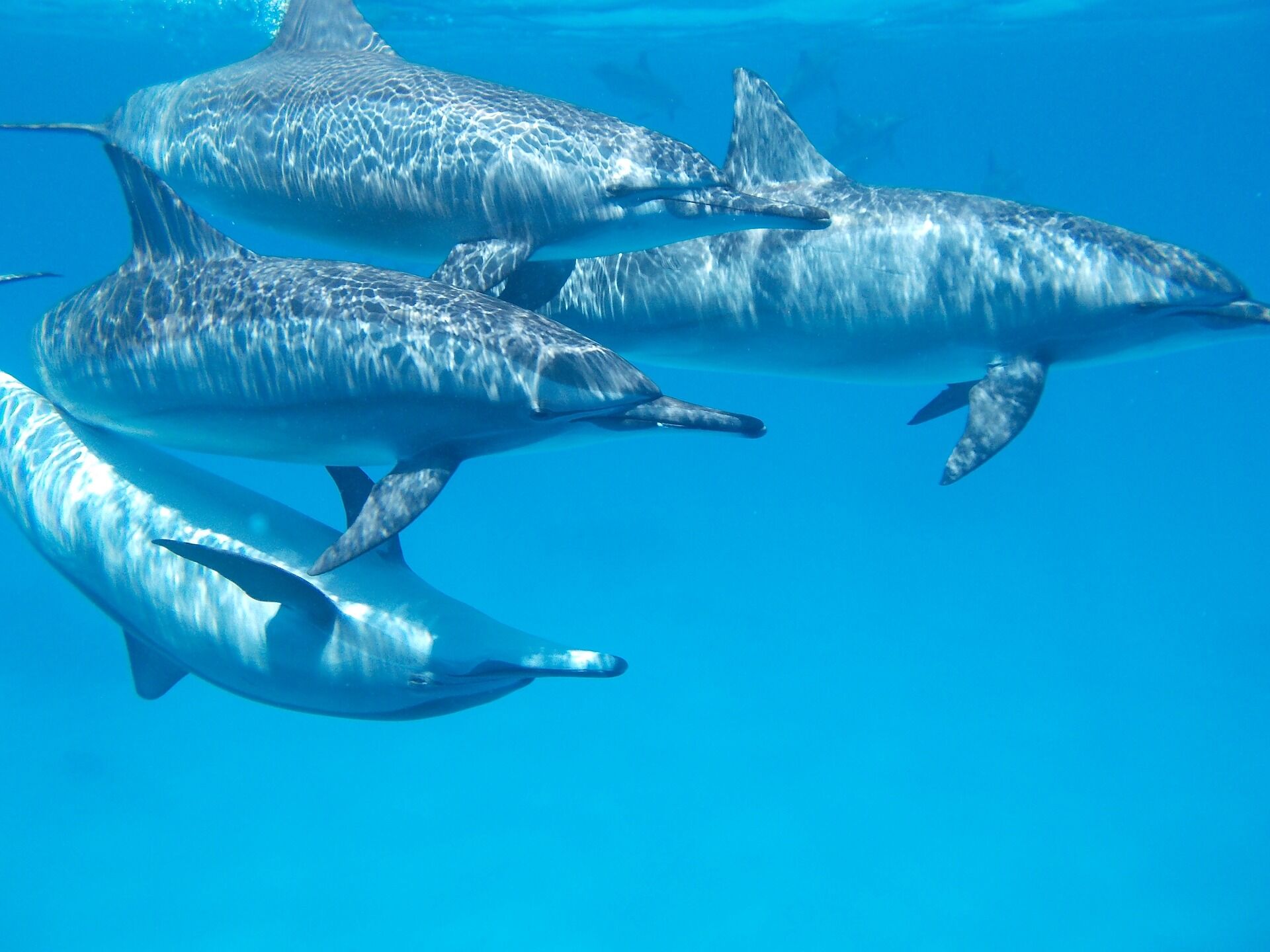
Open-ocean spinner and spotted dolphins live in much larger, looser groups, from about 50 to several hundred animals, with weaker bonds between individuals.
They know each other by name
Every bottlenose dolphin develops a signature whistle, a unique call that works as a name. Other dolphins copy it to address that individual.
Research at the University of Chicago tested how long that recognition lasts by playing recordings to dolphins who had been moved between facilities. They responded to the signature whistles of animals they had not been housed with for twenty years. That is the longest social memory recorded in any species other than humans.
It also explains why the fission-fusion structure works. If you can recognise hundreds of individuals and remember them for decades, a fluid social network is manageable in a way it would not be otherwise.
What the pod is for
Protection
Tiger sharks, bull sharks and dusky sharks all take dolphins, mostly calves and sick adults. A tight group is harder to pick apart, and dolphins in numbers will mob and ram a shark rather than flee. Isolation is what gets an animal killed.
Hunting
Cooperative feeding is where pods really earn their keep: driving fish into a ball and holding it there, herding a school into shallow water, taking turns to feed while others maintain the formation. Group size trades off against competition though, and for some prey a small group eats better per animal than a large one.
Raising calves
A dolphin calf takes years to become independent and a female may raise only a handful in her life. Other females in the group help: babysitting while the mother feeds, and pushing a newborn to the surface for its first breath. In orcas this goes further, with sons and daughters staying with their mother permanently.
Resting safely
Dolphins cannot switch off. They shut down one brain hemisphere at a time so that they keep breathing and keep watch, and groups tighten up and slow down while they do it. We explain the mechanism in how dolphins sleep without drowning.
A note on hierarchy
You will read that dolphin pods are led by a dominant male. That is a poor description of what has actually been documented. Male dolphins do compete and do form alliances, and aggression between males is real, including chasing, tail-slapping and jaw-popping. But the enduring core of most dolphin societies is female: mothers, calves, and the female associations around them. In orcas the leadership is unambiguously female.
The scars tell the same story. Adult males in many populations carry parallel tooth-rake scars from other dolphins’ teeth, a running record of fights within and between groups.
How pods are studied
Most of what is known comes from long-term photo-identification. Researchers photograph dorsal fins, whose nicks and scars identify each animal, and build association records that now run for decades in several wild bottlenose populations. Genetic samples from small biopsy darts or from sloughed skin show who is related to whom.
For the broader picture, see our dolphin facts guide.
Updated 25 October 2026: merged our post on how dolphin pods are organised into this guide.