Over 30 Pilot Whales Died in New Zealand
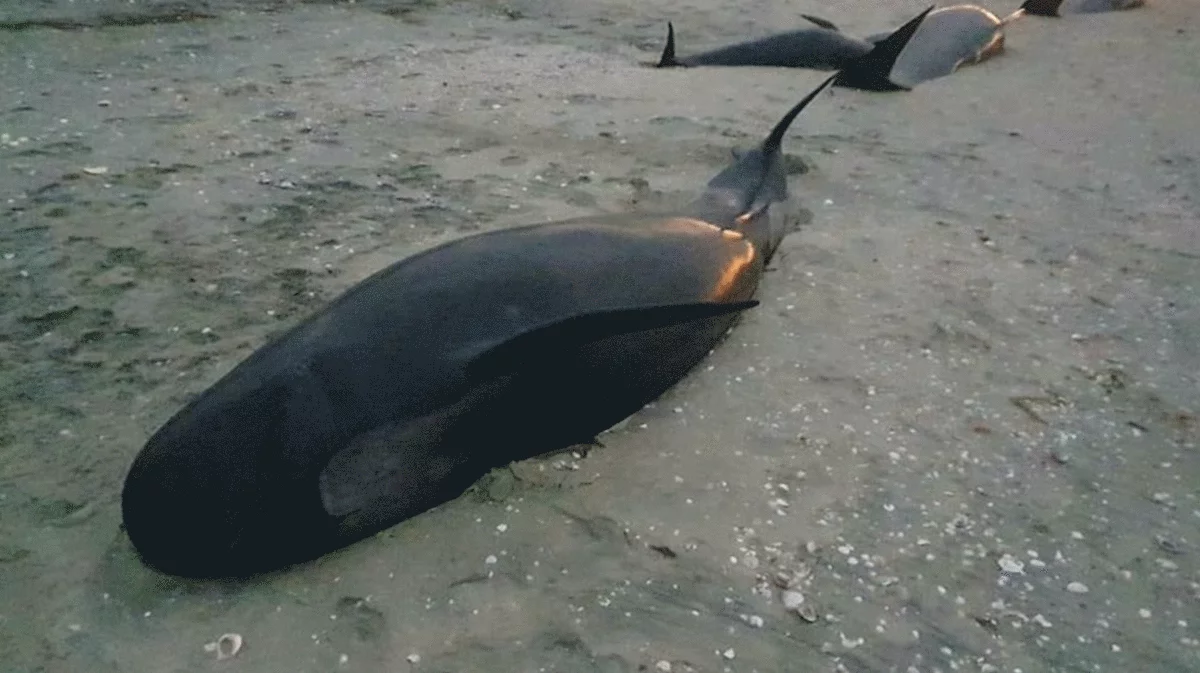
On St Patrick’s Day 2022, a pod of pilot whales stranded at Farewell Spit in New Zealand. The pod was found late on Thursday 17 March. Early on Friday the New Zealand Department of Conservation counted 34 animals ashore, 29 already dead and five still alive. By Friday evening more than 30 whales had died. This page keeps the timeline, then explains the thing the original news could not: why Farewell Spit, of all beaches, traps whales again and again.
For the broader picture, see our dolphin conservation guide.
The timeline of the stranding
- Thursday 17 March, late: the pod was found stranded on Farewell Spit.
- Friday 18 March, early: the Department of Conservation counted 34 pilot whales, 29 already dead and five alive.
- 11am Friday: the five survivors were refloated on the high tide.
- Friday evening: one of the five had stranded again. A newly stranded whale was found several kilometres away at Triangle Flat in poor condition and was euthanised, and a dead whale was found there too. It was not established whether the Triangle Flat whale was one of the five refloated earlier.
The detail that a refloated whale came straight back is not a fluke. It is one of the most consistent and heartbreaking features of mass strandings, and the geography of Farewell Spit is a big part of why.
Why Farewell Spit is called a whale trap
Farewell Spit is the longest sandspit in New Zealand, a hooked finger of land that forms the northern edge of Golden Bay at the top of the South Island. It runs roughly 25 kilometres of stable land plus another 5 kilometres of mobile sand. That hook curves around the entrance to Golden Bay and encloses a vast area of shallow, gently sloping tidal flats.
At low tide the water can retreat as much as seven kilometres, exposing around 80 square kilometres of mud flat. For seabirds that is a rich feeding ground. For whales it is a trap. A pod that swims into the bay can find the water draining away faster than it can react, leaving the animals beached on the flats before they understand what has happened. The protruding shape of the spit and its long, shallow beaches are exactly the conditions that make refloating so hard, because a refloated whale is still inside the same trap.
Why echolocation fails here
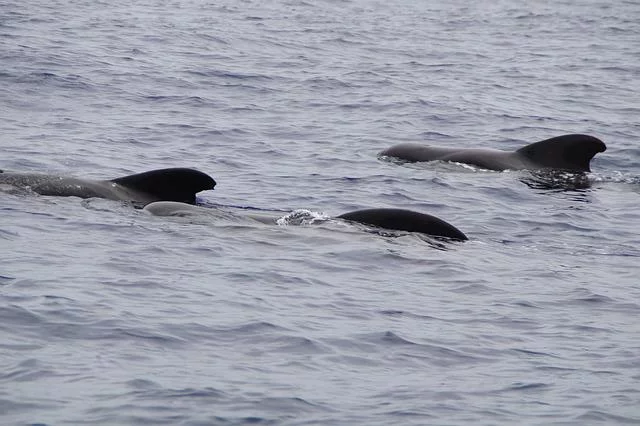
Pilot whales navigate and hunt using echolocation, sending out clicks and reading the echoes. This works superbly over steep underwater terrain, such as the edge of the continental shelf where pilot whales normally feed. It works poorly over a gently sloping sandy bottom, which returns weak, smeared echoes. The leading explanation for Farewell Spit strandings is that the shallow flat seabed gives the whales’ sonar almost nothing to read, so the pod does not realise it is heading into a dead end.
The role of pilot whale social bonds
Pilot whales are intensely social. They travel in tight pods built around strong family bonds, and they stay together. That loyalty is normally a survival advantage. In a stranding it becomes a liability. If one whale, perhaps sick or disoriented, heads into shallow water, the rest of the pod follows rather than abandon it. That is why strandings happen as whole groups rather than single animals, and why refloated whales often turn back toward pod members still on the beach.
A regular event, not a freak one
Mass strandings are sad, but in New Zealand they are not rare. The country sits across the migratory paths of several whale species, and Farewell Spit in particular sees strandings of long-finned pilot whales most years. New Zealand keeps one of the longest stranding records in the world, and Farewell Spit appears in it repeatedly. The Department of Conservation, supported by the volunteer organisation Project Jonah, runs trained response efforts there: keeping stranded whales cool and wet, supporting them upright, and attempting coordinated refloats on a rising tide. In October 2022, 477 pilot whales stranded in the Chatham Islands over four days, and none survived.
How a refloat is actually attempted
When responders try to save a stranded pod, timing is everything. Whales out of water overheat quickly, because the thick blubber that keeps them warm at sea traps body heat with nothing to carry it away, and their own weight crushes their organs without water to support them. Volunteers dig channels around the animals, drape them with wet sheets, pour seawater over them, and keep them upright. The refloat itself is staged for high tide, and crews try to move whales as a group so social bonds pull them seaward rather than back to the beach. Even with all of that, success at a site like Farewell Spit is far from guaranteed, which is why so many of these stories end the way this one did.
What this means for the rest of us
The honest answer to why it happened is geography plus biology: a shallow hooked coastline, a fast-draining tide, sonar that struggles over flat sand, and a species that will not leave its family. Scientists cannot stop strandings, but understanding the mechanism helps responders decide when a refloat has a real chance and when it does not. To learn more about the animals involved, see our profile of the pilot whale, which despite its name is one of the largest members of the dolphin family.
Continue exploring at our store
If this article sparked your interest, head over to our guide on dolphin habitats at the We Love Dolphins store for related reads and gear.
Updated 25 October 2026: corrected the stranding timeline (found late Thursday, counted and refloated on Friday) and the number of refloated whales that stranded again.