Dolphin Myths Debunked: Common Beliefs That Are Wrong
Dolphins inspire a lot of affection, and affection breeds myths. Here are the ones that come up most often, and what the evidence actually says.
Myth: dolphins are always friendly
Dolphins are wild predators. Solitary sociable individuals do seek out people, and a few became famous for it, among them JoJo in the Turks and Caicos and Fungie, who spent nearly forty years in Dingle harbour before disappearing in October 2020, but they are the exceptions that get written about precisely because they are unusual. Most wild encounters end with the dolphins going about their business.
Bottlenose dolphins routinely kill harbour porpoises in several well-documented regions, a behaviour researchers call porpicide, and male coalitions in Shark Bay herd and coerce females over long periods. Friendly does not cover it.
Myth: dolphins rescue swimmers
There are documented cases of dolphins guiding swimmers toward shore or interposing themselves between people and sharks. There are also documented cases of dolphins ignoring swimmers entirely, and cases of them behaving aggressively.
The selection effect is enormous. A rescue makes the news. An indifferent encounter makes nothing.
Myth: dolphin-assisted therapy works
Dolphin-assisted therapy is a tourist product rather than a treatment. Lori Marino and Scott Lilienfeld have reviewed the published studies three times, in 1998, in 2007, and again in 2021 in the Journal of Clinical Psychology under the title “Third time’s the charm or three strikes you’re out?”. Each time they found the same thing: research undermined by missing control groups, tiny samples and no randomisation, and no sound evidence that the therapy does what is claimed for it. Their 2021 conclusion was that there is still insufficient evidence that dolphin-assisted therapy has therapeutic value, and any apparent benefit is consistent with novelty and general placebo effects.
The practice also raises serious welfare problems for the dolphins involved.
Myth: dolphins never bite
They have powerful jaws and they use them when stressed, threatened or crowded. Bites are uncommon in ordinary boat-based watching, but they have been recorded in swim-with programmes and in unmanaged close encounters where people pushed too far.
Myth: dolphins are fish
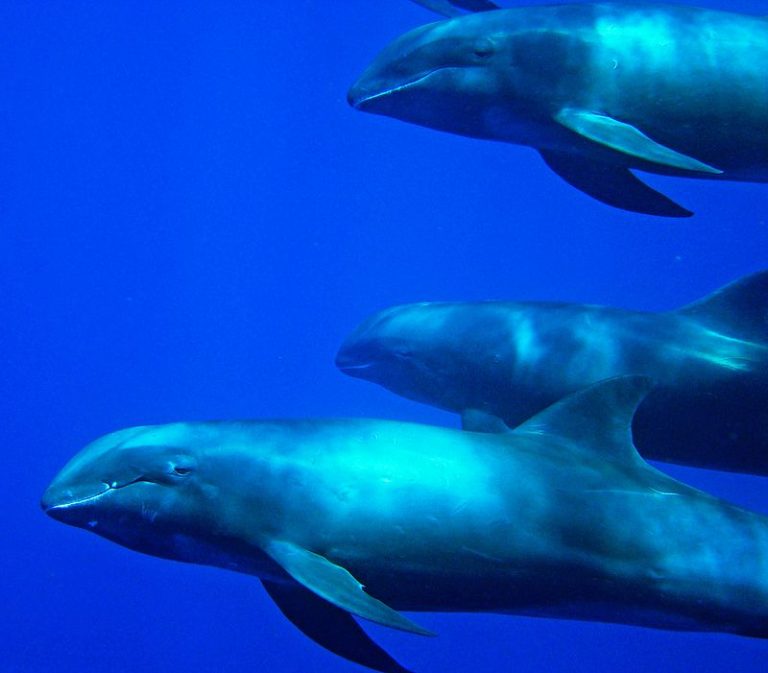
They are mammals: warm-blooded, air-breathing, live-bearing, and they nurse their calves. Their closest living land relative is the hippopotamus, and the lineage went into the water around 50 million years ago. The myth survives because dolphins live in the sea and are shaped like something that lives in the sea.
Myth: orcas are not dolphins
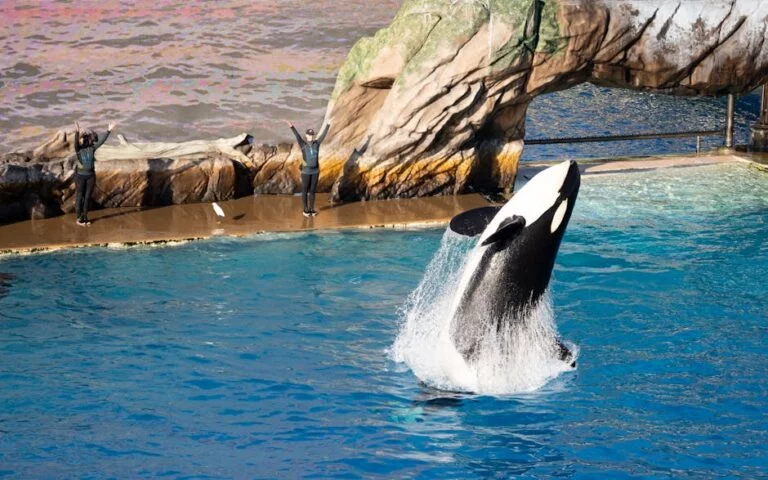
The orca is the largest member of the oceanic dolphin family, Delphinidae. The common name killer whale is what obscures it. We take that apart properly in are orcas whales or dolphins.
Read next
- dolphin facts guide
- dolphin facts that still surprise people
- what the intelligence evidence actually shows
- whether dolphins can detect pregnancy
Frequently asked questions
Are dolphins really friendly to humans?
Sometimes. Wild dolphins behave like wild animals. Sociable solitary individuals exist but are rare, and friendliness is not a species trait.
Do dolphins rescue swimmers?
It has happened and been documented. So have indifferent and aggressive encounters. The rescue narrative is partly a reporting bias. Our piece on dolphins saving people checks how solid each story is.
Does dolphin-assisted therapy work?
No. Marino and Lilienfeld reviewed the published research in 1998, 2007 and 2021, and found no methodologically sound evidence of clinical benefit on any of the three passes.
Are dolphins fish?
No. They are mammals: warm-blooded, air-breathing, live-bearing and milk-feeding. Their ancestors were land animals around 50 million years ago.
Are orcas dolphins or whales?
Both. The orca is the largest member of the oceanic dolphin family, and all dolphins are toothed whales.