
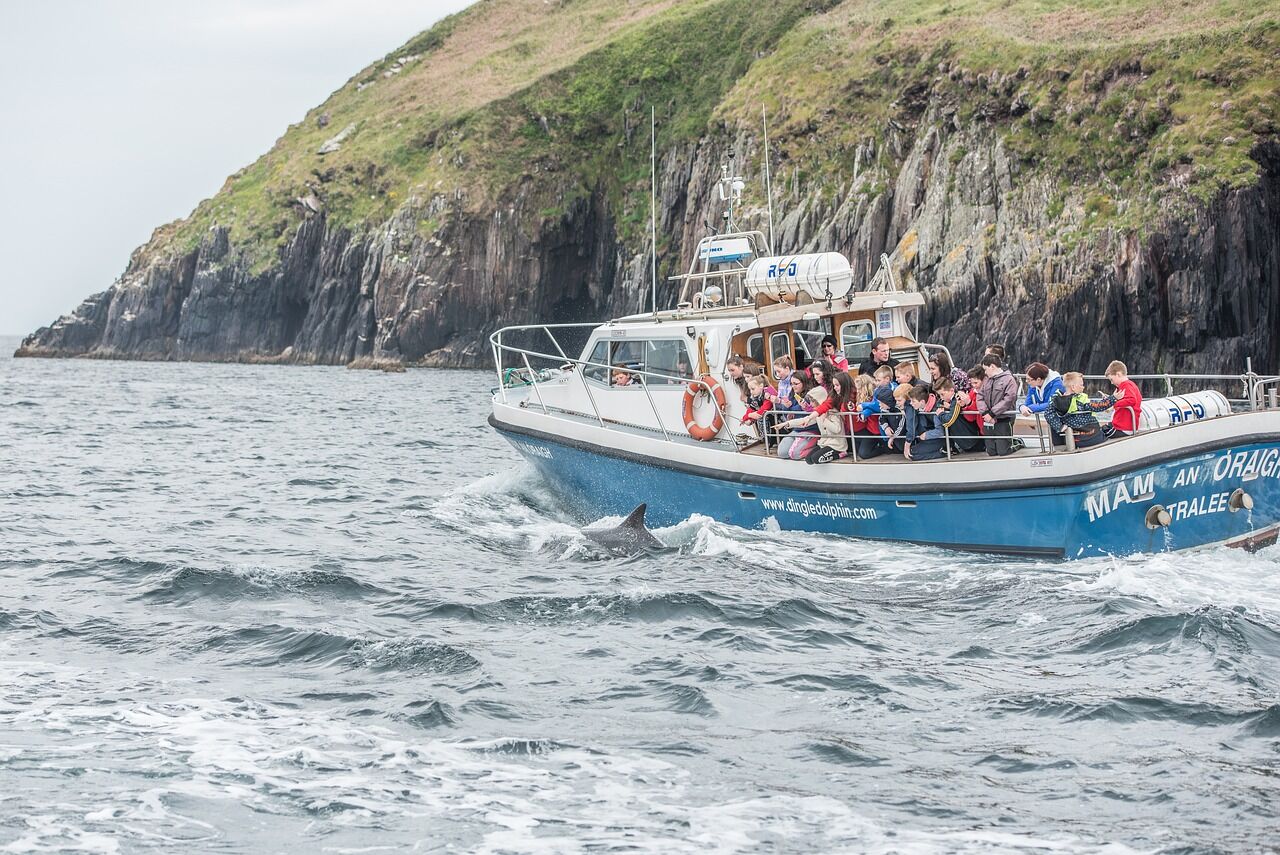
Saying goodbye to Fungie the Bottlenose Dolphin
Fungie was a solitary wild bottlenose dolphin who lived in the waters around Dingle, on the southwest coast of Ireland, for 37 years. He first appeared in Dingle harbour in 1983, became one of the best known animals in Europe, and vanished in October 2020. A year later the town held a memorial for him. This is the story of the dolphin who changed a place.
How Fungie arrived in Dingle
He was first noticed in 1983, escorting fishing boats out of Dingle harbour. Most bottlenose dolphins live in tight social groups, but Fungie lived alone and actively sought out people, boats, and swimmers. Marine biologists call animals like this solitary sociable dolphins, and only a few dozen have ever been documented worldwide. Our piece on a woman trying to ride a beaked whale at Zandvoort explains why touching any wild cetacean is a bad idea.
Even the name came from the town rather than from science. It was borrowed from a local fisherman nicknamed Fungus, on account of a beard he was attempting to grow. The popular story that the dolphin escaped from an English aquarium is folklore, not confirmed fact. What is certain is that he never left. Most wild bottlenose dolphins range over wide stretches of coast; Fungie stayed loyal to a few miles of water off the Dingle Peninsula for his entire adult life.
A record-breaking dolphin
His most remarkable achievement was simply how long he kept it up. He grew to roughly 13 feet and around 500 pounds, and by 2019 Guinness World Records had declared him the oldest solitary wild dolphin in the world. Male bottlenose dolphins typically live around 40 years in the wild, so he was already an old animal when he disappeared.
Across 37 years there was never a recorded case of Fungie behaving aggressively towards a person. He played with swimmers, surfers, kayakers, and divers. For a wild animal in near daily contact with humans, that record is extraordinary.
What Fungie meant to Dingle
Dingle is a small town, and one dolphin reshaped its economy. A whole local industry grew up around boat trips to see him, and visitors travelled from around the world on the strength of a single animal. That traffic supported boats, cafes, hotels, and shops for decades. He also worked as a living classroom: for a lot of people who came for a novelty photograph, Fungie was the first wild marine mammal they had ever seen up close.
The disappearance
Fungie was last seen on 13 October 2020. In 37 years he had never been absent for more than a few hours, so when days passed with no sighting the alarm spread fast. Local boats searched the waters off the peninsula and divers joined in, but no trace was ever found.
Marine experts concluded he had almost certainly died, with old age the most likely cause. By 2019 he was thought to be at least 40, old for a male of his species. The COVID-19 lockdowns of 2020 had already changed his world: a dolphin who thrived on daily human company found the harbour suddenly quiet, and nobody will ever know what that did to his final months.
The memorial
On Sunday 17 October 2021, a year after he was last seen, Dingle held a farewell. Local boat operators ran free trips to the harbour mouth, and organisers estimated that about 1,000 people came. A priest and a Church of Ireland minister said a prayer at sea, and written tributes and drawings by local schoolchildren were on display at the harbour entrance. It was the kind of send-off usually reserved for a person.
What makes a solitary sociable dolphin
Fungie belonged to a small and odd category. Most bottlenose dolphins are intensely social, living in fluid groups that range from a handful of animals to more than a hundred. A solitary sociable dolphin lives apart from its own kind and seeks out contact with people, boats, and sometimes other species instead. Why an individual ends up this way is not well understood. It may follow the loss of a pod, separation as a calf, or simply a temperament that pulls the animal towards harbours.
Biologists also warn that these dolphins pay for the attention. Constant human contact exposes them to boat strikes and to inappropriate feeding, and several well known solitary dolphins elsewhere have died as a direct result. Fungie’s long unharmed life was the exception, not the pattern.
Legacy
Fungie’s story is a rare, gentle counterpoint to the harder news about dolphins in captivity and at sea. He was wild, free, and chose human company on his own terms. To understand more about his species, see our profile of the common bottlenose dolphin, and for the wider picture our dolphin conservation guide goes deeper.
A lot of the personal stories about Fungie live only in the memories of people who met him, and we do not have much of that on record. If you knew him, or went out on the boats, leave a comment and help us fill it in.
Continue exploring at our store
If this article sparked your interest, head over to our guide on dolphin habitats at the We Love Dolphins store for related reads and gear.
Updated 25 October 2026: corrected the account of the 2021 memorial and removed an unsourced estimate of his age.


We went to Dingle in 2018 and saw him from the boat. So sad when he disappeared. The whole town loved him.