
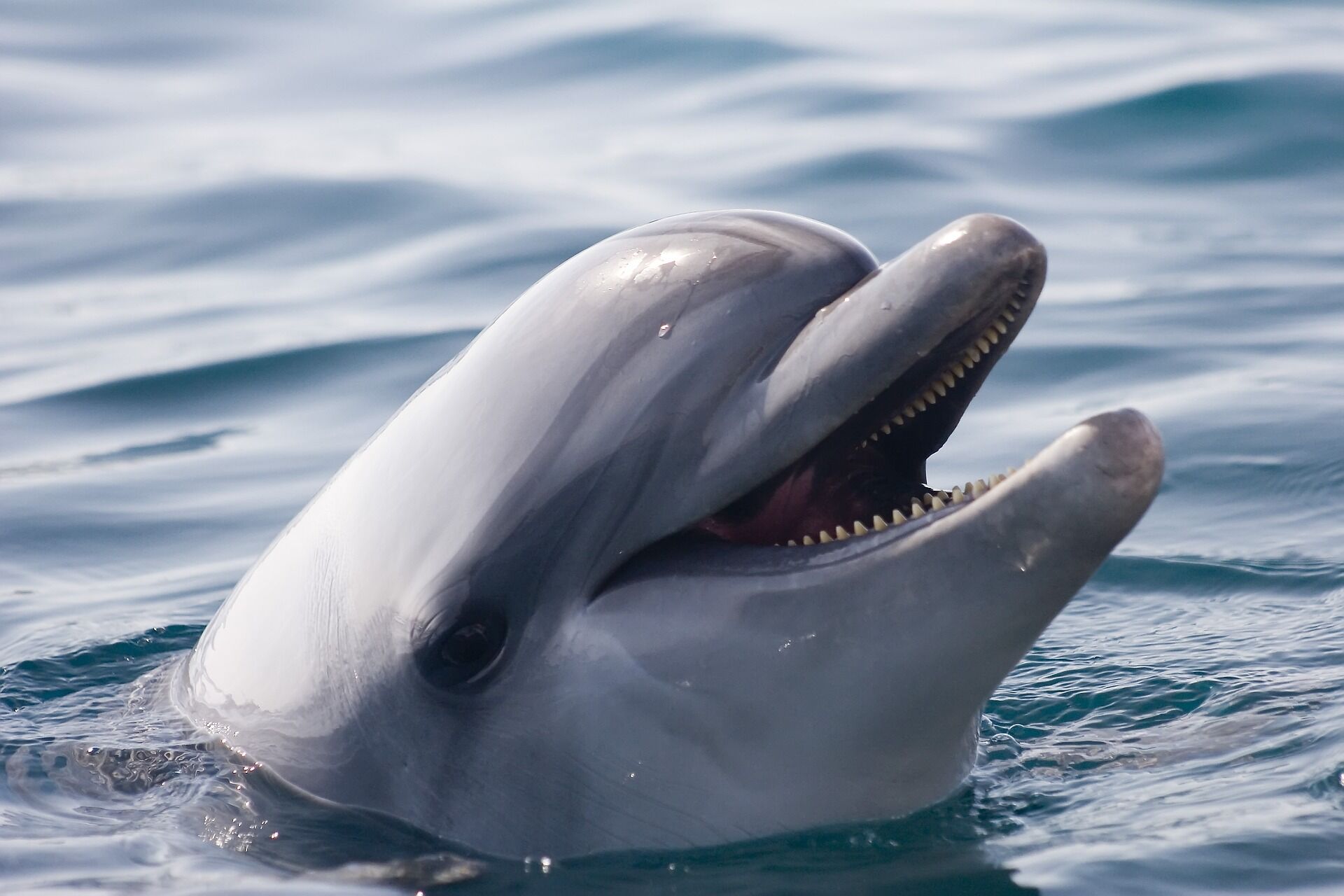
25 Amazing Dolphin Facts You Probably Didn’t Know
Dolphins are among the best known animals in the sea and among the least understood. Everyone knows they are clever and they seem to like us. Fewer people know their ancestors walked on land, that they swallow their food whole, or that they can shut down half a brain at a time. Here are 25 facts worth having.
25 dolphin facts
1) Male dolphins are bulls, females are cows, and the young are calves.
2) They are carnivores. Fish, squid and crustaceans, depending on the species and the region.
3) They cannot breathe underwater. Every breath is taken at the surface through a blowhole on top of the head, and it is a conscious act rather than an automatic one.
4) Echolocation gives them the position, shape and size of objects in water too dark or murky to see through. The sound is produced in the melon, a fatty organ in the forehead, and the returning echoes are picked up through fat-filled channels in the lower jaw.
5) Dolphin calves are born tail first. So are the calves of whales and porpoises. It is a cetacean trait rather than something unique to dolphins, and it reduces the risk of the newborn drowning during delivery.
6) They are one of a small set of mammals that live permanently in water, alongside whales, porpoises, manatees and dugongs. Seals, sea lions and walruses still come ashore.
7) Dolphins sleep one brain hemisphere at a time. It is called unihemispheric slow-wave sleep, and it exists because an unconscious dolphin would stop surfacing to breathe.
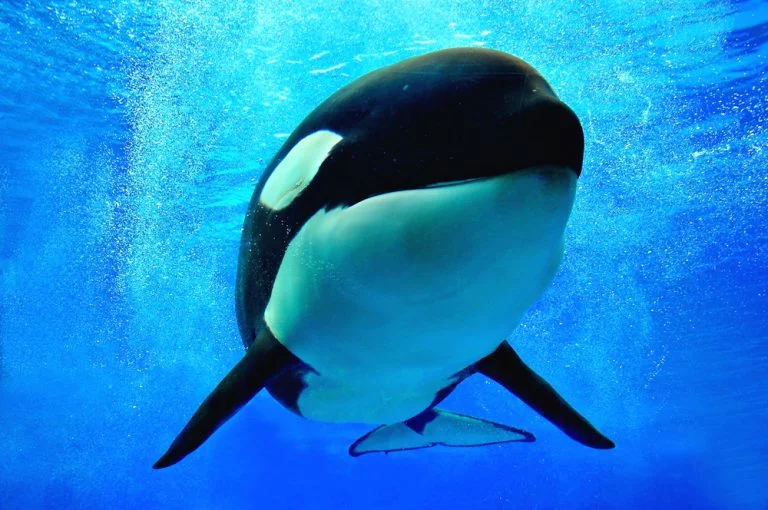
8) The orca, usually called the killer whale, is a dolphin. It is the largest member of the family.
9) Whistles and clicks are produced in nasal passages below the blowhole, and pods develop their own local vocal patterns. Dolphins both hear and produce sound at frequencies far above the human range.
10) They are fast, but not endlessly fast. A dolphin cruises at a fairly modest pace and saves its top speed for short bursts, which can reach roughly 30 to 40 km/h in the quicker species. The fastest human swimmers manage under 9 km/h at peak.
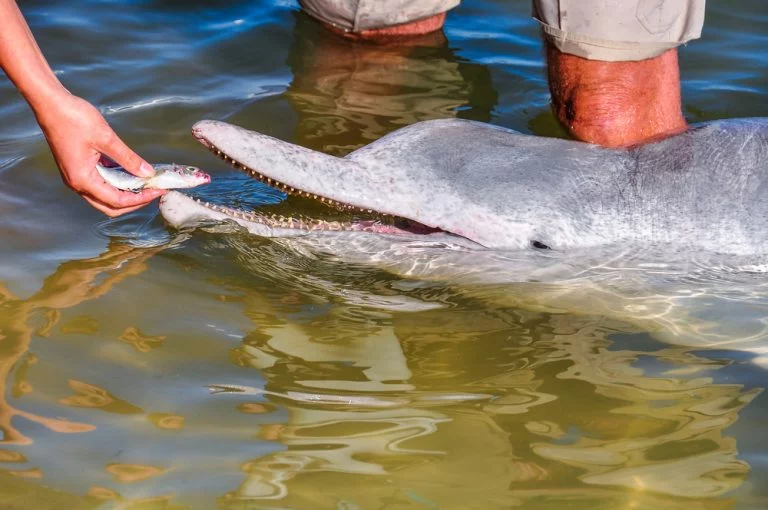
11) They live in every ocean. Most species need salt water, but a handful, including the Amazon river dolphin, live in fresh and brackish rivers.
12) A bottlenose dolphin carries something like 72 to 104 teeth, and uses them only to grip. Dolphins do not chew. Prey goes down whole.
13) The ancestors of dolphins walked. Fossils record a transition from four-legged land mammals into fully aquatic cetaceans, and the closest living land relative of a dolphin is the hippopotamus.
14) The eyes move independently, so a dolphin can watch two things at once.
15) About 43 dolphin species are currently recognised: 38 oceanic dolphins and five river dolphins. The number moves as genetic work splits some populations and merges others, so any count you read is a snapshot.
16) Several species are in serious trouble from bycatch and pollution. The Chinese white dolphin is listed as Vulnerable and declining in the Pearl River estuary, and the Yangtze river dolphin, the baiji, has not been reliably recorded since the 2000s and is treated as functionally extinct.
17) Friendly is a reputation, not a rule. Dolphins are large predators. Injuries to people are rare, but they happen, and they happen most often where humans have pushed an encounter.
18) They are mammals, so calves are born live and nursed on milk, for anywhere from a few months to several years depending on the species.
19) Dolphin calves are born with a few whiskers along the beak, which normally drop off soon after birth. The Amazon river dolphin is the one that keeps them, retaining sensory bristles into adulthood to feel for prey in muddy water.
20) Pod size ranges from a handful of animals to super-pods of a thousand or more where prey is concentrated.
21) The orca is the biggest dolphin. Large males reach around 9.8 m and over 10 tonnes.
22) Relative to body size, dolphin brains are large. The encephalisation quotient of a bottlenose dolphin comes out between about 4.1 and 5.3 depending on the dataset, meaning four to five times the brain you would predict for a mammal of that body mass. Among mammals only humans score higher, though what that ratio tells you about actual thinking is still argued over.
23) Bottlenose dolphins pass the mirror self-recognition test, which is taken as evidence of self-awareness and is passed by very few species.
24) A dolphin’s stomach has three chambers, not one and not two: a muscular forestomach that does the crushing, a main stomach that does the chemical work, and a pyloric stomach that feeds the intestine.
25) They heal remarkably well. Dolphins survive deep shark bites that would kill most mammals, apparently without bleeding out or becoming infected, and researchers are still working out how.
Five more that surprise people
Some dolphins seem to look after their skin. In the northern Red Sea off Egypt, Indo-Pacific bottlenose dolphins line up to rub against particular corals and a sponge. Lab tests on those species found 17 active compounds, some of them antibacterial, which suggests the rubbing helps the skin, though that has not been proven (Morlock and colleagues, iScience, 2022).
Outside humans, menopause is well documented in five toothed whales: the orca, short-finned pilot whale, false killer whale, narwhal and beluga. Three of the five are dolphins. A 2024 study in Nature found that females of these species live about 40 years longer than females of similar-sized toothed whales without menopause, while their breeding years are about the same (Ellis and colleagues, 2024).
Bottlenose dolphins blow rings of air underwater and then play with them, swimming through them, biting them and steering them with the beak. The best descriptions come from captive dolphins (Marten and colleagues, Scientific American, 1996).
Male bottlenose dolphins in Shark Bay, Western Australia, form alliances within alliances. Pairs and trios team up into larger groups, and some of these second-order alliances last 20 years (Connor and Krützen, Animal Behaviour, 2015).
At Laguna in southern Brazil, wild bottlenose dolphins and fishers standing in the shallows have caught mullet together for more than 140 years. The dolphins drive the fish toward the nets and signal when to cast. A 2023 study in PNAS found that dolphins taking part had about 13 percent higher survival than dolphins that did not (Cantor and colleagues).
Quick quiz
- What class of animal is a dolphin? Mammal.
- What is the hole on top of the head called? The blowhole.
- What is the fin on the back called? The dorsal fin.
- What is the tail called? The fluke.
- Are there more than 50 species of cetacean? Yes, roughly 90.
- What do most dolphins eat? Fish and squid, with the mix varying by species.
- Which dolphin do most people picture? The common bottlenose.
- Is the orca the largest dolphin? Yes.
- Do dolphins have navels? Yes, an umbilical scar from the placenta.
- Can a dolphin sleep with half its brain? Yes, that is how it keeps breathing.
For the full picture, see our dolphin facts guide. For the beliefs that do not hold up, see dolphin myths debunked.
Updated 25 October 2026: merged our post on dolphin facts that surprise people into this list, added five facts from recent research, and gave the bottlenose brain-size figure as the range the studies report.


wow didn’t know they sleep with half its brain awake