

How Well Do You Know Dolphins?
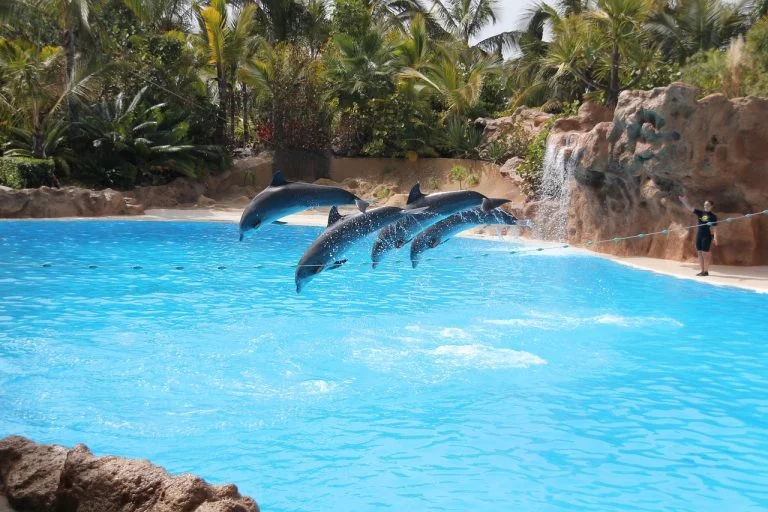
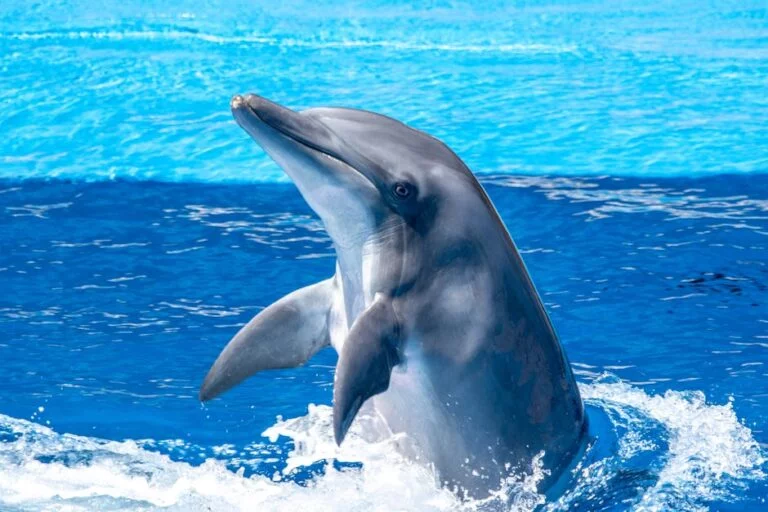
Photo by Magda Ehlers on Pexels.
Most people can picture a leaping bottlenose. The family is a good deal stranger than that one image, and this page is the biology grounding: what dolphins are, where they live, how they sleep, hunt, breed and die. If you want the myth-busting version instead, our dolphins trivia quiz game covers the things people most often get wrong.
For the broader picture, see our full dolphin facts guide.
How many species of dolphin are there?
Close to forty species sit in the oceanic dolphin family Delphinidae, and a small number of river dolphins sit outside it in their own lineages. The count moves as genetic work splits or merges populations, which is why you will see slightly different numbers in different places.
The range within the family is enormous. The orca, largest of them all at over 9 m despite the name killer whale, is a dolphin. So is the spinner, famous for its corkscrew leaps, and so is the Amazon river dolphin, which turns pink with age, and the South Asian river dolphin, which is effectively blind and works muddy rivers by sound alone.
Where dolphins live and how they sleep
Dolphins occupy oceans, coastal shallows, estuaries and a few major river systems. Wherever they are, they face the same awkward problem: they are air-breathing mammals that must surface deliberately, and they still need rest.
The solution is unihemispheric sleep. One half of the brain shuts down while the other half keeps breathing on schedule and keeps one eye open for trouble. A resting pod usually drifts slowly at the surface, a behaviour called logging.
Pods, superpods and family life
A typical pod holds anywhere from two to around thirty animals, but where food is abundant several pods merge into superpods of hundreds or thousands. Numbers are a defence: more eyes spot a shark sooner, and a group can mob a threat that would kill a lone animal.
Females keep their calves close for two to three years and sometimes longer, nursing and teaching them to hunt, and calves often stay near their mothers well after weaning.
Speed, hunting and tool use
Bottlenose dolphins cruise gently and can sprint at roughly 20 miles per hour, so you are not going to out-swim one. They are opportunistic hunters of fish, squid and crustaceans, and the interesting part is the tactics:
- Echolocation. Clicks go out, echoes come back, and the animal builds a sound picture of prey, seabed and obstacles in water where sight is useless.
- Tool use. In Shark Bay, Western Australia, some bottlenose dolphins carry marine sponges on their beaks to shield them while rooting through coarse seabed, a skill learned from the mother.
- Signature whistles. Each dolphin develops its own whistle, which works like a name, and others use it to call that individual.
- Cooperative herding. Pods corral fish into tight balls, and some populations drive fish onto mud banks and strand them deliberately.
How long do dolphins live?
Male bottlenose dolphins live around 40 to 45 years and females often live past 50. The oldest scientifically documented wild bottlenose was Nicklo, a female in Sarasota Bay, Florida, around 67 when last seen in 2017.
Those ages are not guesses. Researchers count annual growth layers inside a tooth, much as you would count tree rings, and cross-check against photo-identification records that in Sarasota now run back more than fifty years.
Reproduction is slow, which is a large part of why dolphin populations are fragile. A female usually produces one calf every three to six years after a pregnancy of around twelve months. A newborn bottlenose is roughly a metre long, swims within minutes, and is helped to the surface for its first breath by its mother or another pod member.
The biggest threat to dolphins
Climate change and pollution both harm dolphins, but the largest single cause of death is bycatch: dolphins trapped and drowned in gear set for other species. The widely used estimate, from a 2006 paper by Read, Drinker and Northridge, puts cetacean deaths in fishing gear at around 300,000 a year worldwide. Better net design, acoustic deterrents and closures where the animals concentrate are the most effective interventions available.
Dolphins and people
There are recorded cases of individual wild dolphins forming repeated associations with particular people, and of solitary dolphins that attach themselves to a harbour or a stretch of coast for years. These are not pets. They are wild animals choosing contact, and that choice is itself the interesting thing: it says something about how curious and how socially driven these animals are.
Treat the rescue stories with more caution. Accounts of dolphins shielding swimmers from sharks are widely repeated and rarely well documented, and it is hard to separate deliberate protection from an animal doing what it would do anyway.
Now test yourself
You have the facts. Take the quiz below, then leave your score in the comments.
Continue exploring at our store
If this article sparked your interest, head over to the We Love Dolphins merchandise store for related reads and gear.
Updated 25 October 2026: corrected the bottlenose lifespan figures.
67 for Nicklo is wild. I grew up hearing dolphins only live about 20 years.
That 20 year figure gets repeated a lot. Long term studies, where the same wild dolphins are known by sight for decades, show many females living well past it.
the superpod part reminded me of a huge group we saw from a ferry once. the whole sea was splashing for ages.
fun read. didn’t know the sponge trick gets passed down from the mother.