
Dive into the Deep: A Striped Dolphin Trivia Challenge!
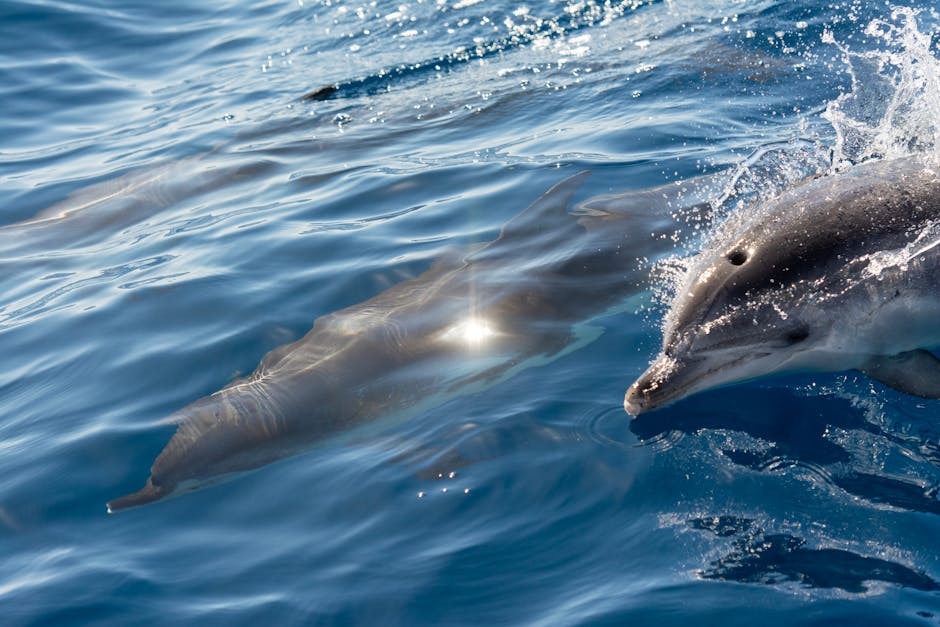
The striped dolphin, Stenella coeruleoalba, is one of the more distinctive animals in the open ocean: slim, fast, and marked with dark bands that run back from the eye along each flank. It lives offshore in warm and temperate seas and is the most numerous cetacean in the Mediterranean. Read the short profile, then take the ten-question challenge.
What it looks like
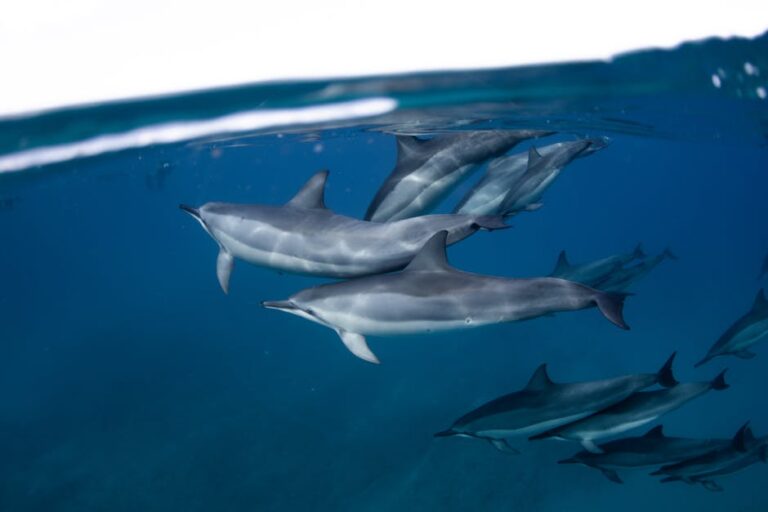
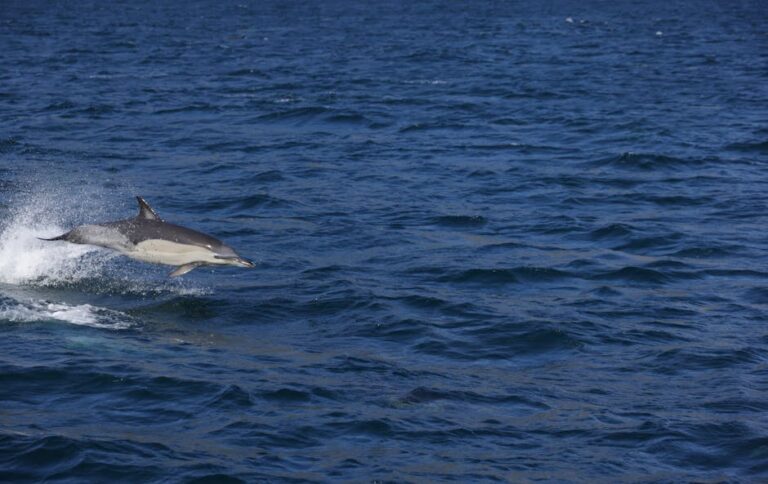
The body is slim and built for speed. The stripes are the giveaway: dark blue-grey bands running from the eye toward the flipper and back along the side, over a pale belly. Adults typically reach about 2.4 m, with the largest males up to 2.6 m, and weigh up to roughly 160 kg. If you are trying to separate one from a common dolphin at distance, look at the flank: the striped dolphin has clean bands, the common dolphin has a tan hourglass.
Where it lives
Atlantic, Pacific and Indian Oceans, plus the Mediterranean. The species keeps to warm and temperate offshore water, usually beyond the continental shelf where the bottom drops away. You are far more likely to meet one miles from land than near a beach, and it dives well below the surface after prey.
How it behaves
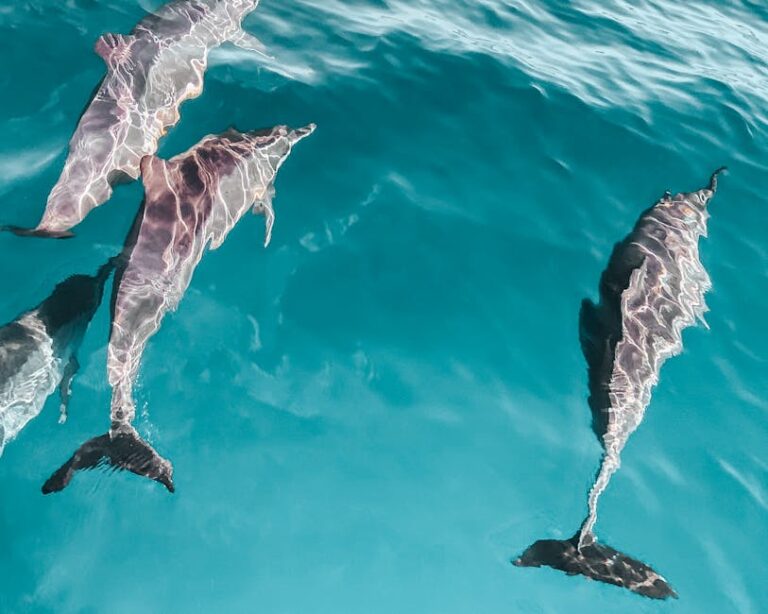
Groups run from dozens to several hundred animals and mix readily with other species. Striped dolphins are strong performers at the surface: high leaps, somersaults, bow-riding, and a manoeuvre called roto-tailing, a high leap during which the animal rapidly rotates its tail in the air. Food is small fish and squid, taken in open water.
Striped dolphin trivia: ten questions
Question 1: What colour are the stripes?
Dark blue or blue-grey.
Question 2: How long does a striped dolphin get?
About 2.4 m typically, up to 2.6 m in large males.
Question 3: Which oceans?
Atlantic, Pacific and Indian, plus the Mediterranean.
Question 4: What does it eat?
Small fish and squid.
Question 5: What is its global IUCN status?
Least Concern, on a total population above two million.
Question 6: How heavy can an adult be?
Up to about 160 kg.
Question 7: How long does one live?
Around 55 to 60 years.
Question 8: What is roto-tailing?
A high leap during which the dolphin rapidly rotates its tail in the air.
Question 9: Do they mix with other dolphin species?
Yes, regularly.
Question 10: What are the main threats?
Bycatch in fishing gear, contaminant load, and prey depletion.
A closer look at question 10
That last answer deserves more room, because the worst thing that ever happened to this species was a disease. At the start of the 1990s a viral epidemic swept the western Mediterranean and the striped dolphin was the animal it hit hardest, with dead dolphins washing up along the Spanish, French and Italian coasts for two years. The virus did the killing, but the reason it spread so easily is thought to be chemical: PCBs and related organochlorines accumulate in dolphin blubber and blunt the immune response, so a population already carrying a heavy contaminant load had little defence. A further outbreak in 2007 was much less lethal.
Drift nets and other fishing gear remain a steady drain, and as a long-lived predator the species carries whatever the food chain below it has been carrying. Least Concern is a statement about total numbers, not about how any particular sea is doing.
Read next
The full account, including range, diving depth and the Mediterranean population history, is in our striped dolphin species profile. For more quizzes, try the orca trivia adventure or the spinner dolphin quiz.
Updated 25 October 2026: corrected the description of roto-tailing.

We see these from the ferry in the Med most summers. Always flat out at the bow.
got 8/10. the disease part was news to me.
7/10, not bad for a species I’d never heard of last week.