

Common Bottlenose Dolphin Trivia: 10 Questions and Answers
The common bottlenose dolphin (Tursiops truncatus) is the dolphin most people picture when they hear the word, and one of the best-studied marine mammals on Earth. Before you reach the ten questions further down, this guide gives you the foundation: size, intelligence, habitat, diet, and life cycle. Read it first and the quiz becomes a victory lap.
Physical characteristics
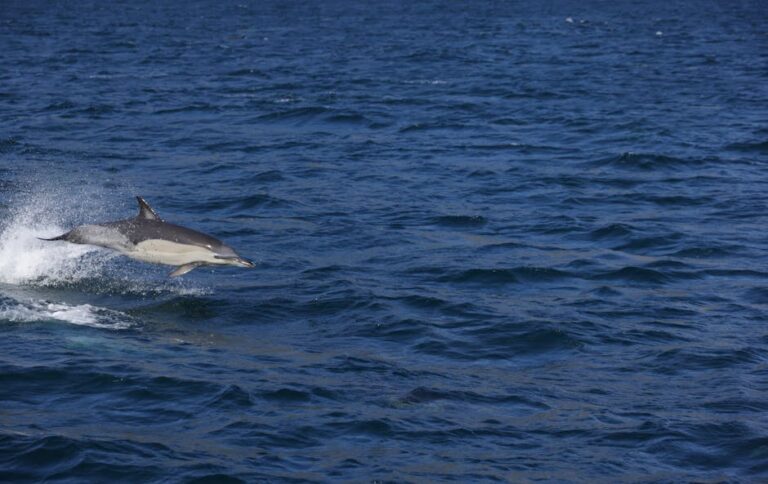
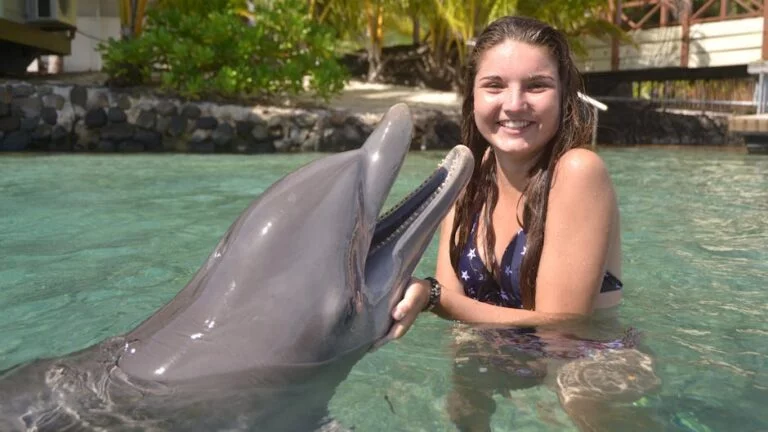
Adults measure roughly 6.5 to 13 feet (2 to 4 metres) and weigh between about 330 and 1,430 pounds, with offshore animals usually larger and heavier than coastal ones. The body is built for speed: a smooth muscular torpedo shape, with a tall curved dorsal fin and a powerful horizontal tail fluke doing the driving. The name comes from the short stubby beak, or rostrum. The skin is smooth and rubbery, grey with a paler belly, and it sheds and regrows its outer layer constantly to stay slippery. Under it sits a layer of blubber that insulates the animal in cool water and stores energy.
Intelligence and behaviour
Few animals rival the bottlenose for brainpower. They use tools, most famously the sponge-carrying dolphins of Shark Bay in Western Australia. They communicate through clicks, whistles, and body posture, and each animal develops a unique signature whistle that functions much like a name. They solve problems, recognise themselves in mirrors, hunt in coordinated teams, and pick up behaviours by watching others. That combination of memory, social learning, and communication is why researchers rank them among the most intelligent animals alive.
Habitat and diet
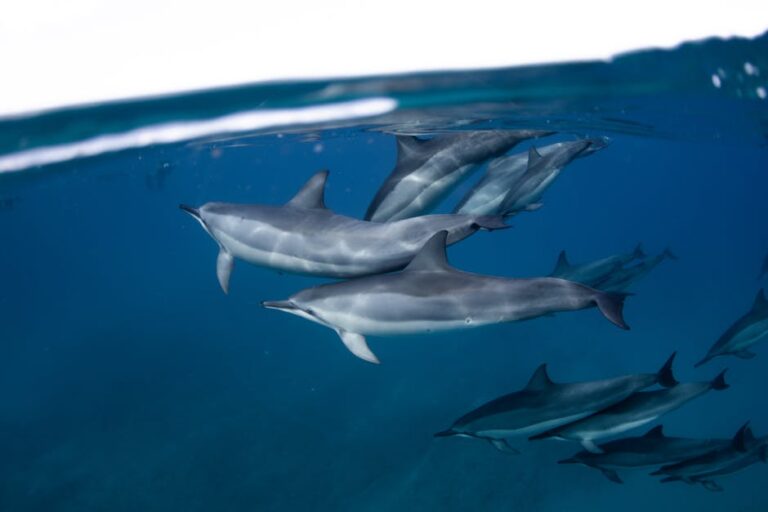
Common bottlenose dolphins live in warm and temperate seas worldwide, from the Mediterranean to the Gulf of Mexico to the coasts of Australia and Japan. They favour shallow coastal areas, bays, and estuaries, but offshore populations range across deep open water too. They are opportunistic predators, feeding mainly on fish and squid, and they adapt their hunting to local conditions: herding fish into tight bait balls, chasing prey onto mud banks, even shadowing shrimp trawlers to snap up whatever the nets stir loose. An adult eats roughly 4 to 6 percent of its body weight in food each day.
Reproduction and life span
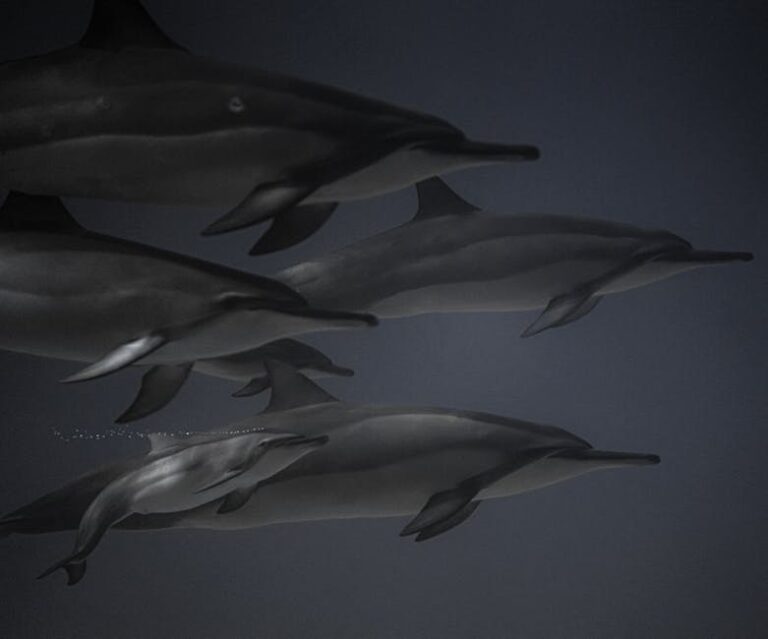
Reproduction is slow, and that shapes everything about the species. After a pregnancy of around 12 months a female gives birth to a single calf, usually once every three to six years. The newborn is about 3 to 4 feet long and is helped to the surface for its first breath. Calves nurse for two to three years and often stay close to their mothers well past weaning, learning the pod’s hunting and social skills.
In the wild, males live around 40 to 45 years and females often live past 50. The oldest documented wild individual was a Sarasota Bay female called Nicklo, born in 1950 and tracked by the Sarasota Dolphin Research Program across roughly 50 years and more than 800 sightings. She was 67 when last confirmed in 2017.
Ten questions about the common bottlenose dolphin
Now test yourself. Cover the answer line and see how many you get. For questions across all species, see our dolphin trivia page.
Question 1: What is the scientific name of the common bottlenose dolphin?
Answer 1: Tursiops truncatus
Question 2: How long do common bottlenose dolphins typically grow?
Answer 2: Around 6.5 to 13 feet, or 2 to 4 metres
Question 3: What is the primary method dolphins use to communicate?
Answer 3: Clicks and whistles
Question 4: What do common bottlenose dolphins primarily eat?
Answer 4: Fish and squid
Question 5: What is a group of dolphins called?
Answer 5: A pod
Question 6: In what type of waters do they primarily live?
Answer 6: Warm and temperate seas
Question 7: What is the lifespan of a common bottlenose dolphin in the wild?
Answer 7: Males around 40 to 45 years, females often past 50. The oldest known wild female reached about 67.
Question 8: How often do females give birth to a calf?
Answer 8: Every three to six years
Question 9: What technique do dolphins use to locate their prey?
Answer 9: Echolocation
Question 10: Are common bottlenose dolphins considered endangered?
Answer 10: Not globally, but they face threats including pollution and habitat loss
A note on that last answer
Question 10 deserves more detail. The species as a whole is listed as Least Concern on the IUCN Red List, because the global population is large and widespread. That does not mean every population is safe. Bottlenose dolphins get entangled in fishing gear, accumulate chemical pollution in their blubber, are struck by boats, lose prey to overfishing, and have their foraging disrupted by underwater noise. Some local groups are in serious trouble even while the species name looks healthy: the Black Sea subspecies, Tursiops truncatus ponticus, is assessed separately and far more severely. It is one of four recognised bottlenose subspecies. A reassuring global label can hide a struggling local population, which is exactly why scientists count dolphins region by region.
However many of the ten you got, the species rewards a closer look. For a deeper read on the same animal, see our full common bottlenose dolphin profile.
Continue exploring at our store
If this article sparked your interest, head over to our guide on dolphin habitats at the We Love Dolphins store for related reads and gear.
Updated 25 October 2026: corrected the lifespan figures in the text and in answer 7.


1,430 pounds! I pictured them a lot smaller than that.
would be fun to add a question on signature whistles. the name thing is the coolest fact in here.
missed two. i can never remember which is which. clicks for finding food and whistles for talking, right?
That’s it. Clicks are for echolocation, whistles are social, and each dolphin has its own signature whistle that works a lot like a name.