230 Pilot Whales Stranded on Tasmania Shore
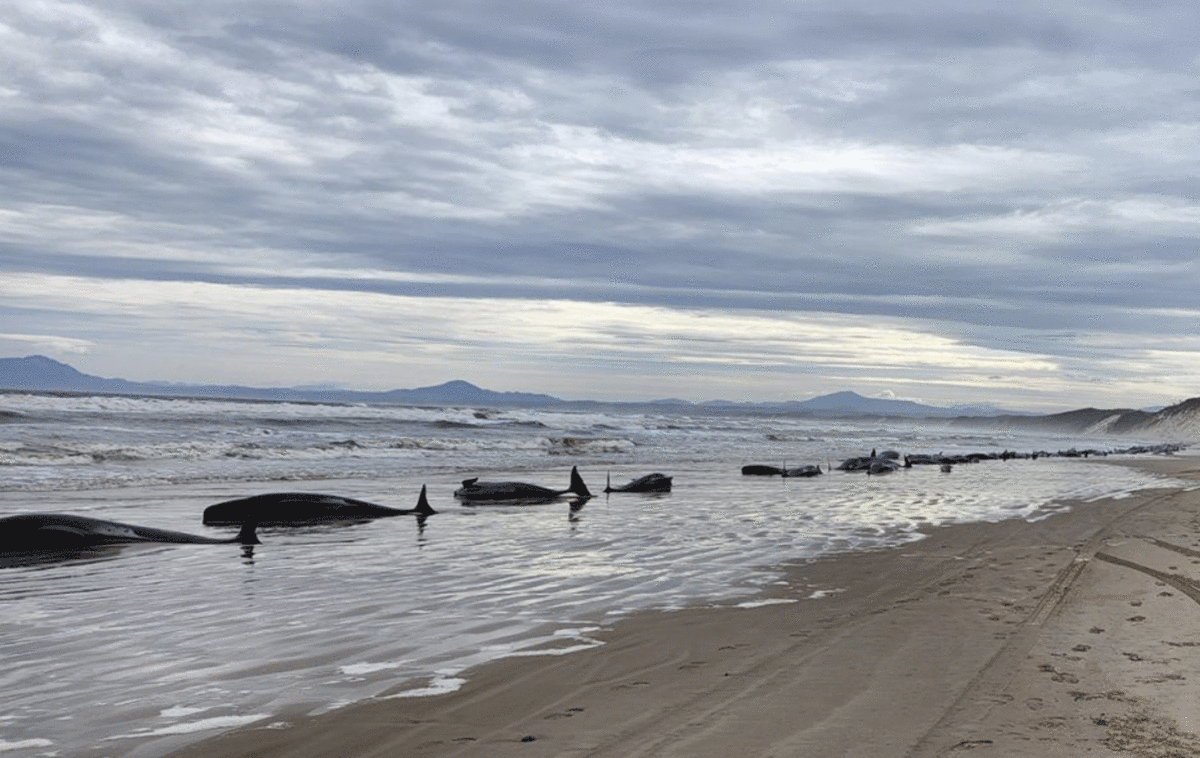
On 21 September 2022 about 230 pilot whales stranded at Macquarie Heads on the west coast of Tasmania. It came days after 14 sperm whales were found dead on King Island off the state’s north coast, and exactly two years after a much larger stranding at the same spot. Only 35 of the 230 were still alive when rescuers reached them. Teams refloated 32.
Our guide to why dolphins strand sets out the mechanisms behind events like this one.
What happened at Macquarie Heads
The whales came ashore on the long exposed beach near the entrance to Macquarie Harbour, with some also on sand flats inside the harbour. Early reports suggested around half the pod was still alive, but the surf took a heavy toll overnight. By the time Tasmania Parks and Wildlife Service staff, working alongside police and marine conservation crews, could start rescue work, 35 were left.
Of those 35, rescuers got 32 back to sea. The next day fewer than 10 of them stranded again. One died and another was euthanised. The location made everything harder: no quick road access, and a shallow surf zone that kept boats from getting in close, unlike the calmer conditions that had helped an earlier rescue at the same place.
The same beach, two years apart
What made 2022 so striking was the repeat. On 21 September 2020, about 470 long-finned pilot whales stranded at the same Macquarie Harbour site, the largest mass stranding ever recorded in Australia. Around 110 were saved that year, helped by calmer water that let boats reach the animals. The same species, the same beach, the same date, two years apart.
Pilot whales: dolphins, not whales
Despite the name, pilot whales belong to the oceanic dolphin family. Long-finned pilot whales grow to around 6 m and are dark, heavy-bodied animals with a bulbous rounded head. They are intensely social, living in stable pods of dozens or hundreds built around long-lived females, and that bonding is central to why they strand in such numbers. There is more in our pilot whale species profile.
Tasmania is a global hotspot for these events. The west coast funnels pilot whale pods along a shoreline of broad shallow bays, and the state’s stranding records go back well over a century. That concentration is why Tasmanian responders are among the most practised anywhere, and why the state keeps a trained marine response capability standing.
Why do pilot whales mass strand?
There is no single accepted explanation, but the same factors come up repeatedly.
- Social cohesion. Pilot whales follow one another. A sick or disoriented leader heading into the shallows can take the pod with it, and freed whales sometimes turn back toward the distress calls of those still stuck.
- Difficult coastline. Gently shelving sandy beaches like the Macquarie Harbour entrance scatter the echolocation clicks the animals rely on, so they lose their read of where the seabed rises.
- Following prey. Marine scientists commenting at the time, among them Olaf Meynecke of Griffith University, raised warmer water and shifting food supplies as a possible driver pulling pods closer inshore.
- One animal in trouble. A single injured or ailing whale can bring a healthy pod ashore, because the others will not leave it.
Wildlife scientist Vanessa Pirotta made the point at the time that repeated strandings of the same species at the same place suggest something about that particular coastline rather than pure bad luck.
What a stranding rescue involves
Refloating a pilot whale is slow physical work. Out of water the animals overheat fast and the weight of their own bodies presses on their organs. Crews keep them wet and shaded, dig channels to take the load off, and use slings and small boats to walk survivors back to deep water. Even then it often fails, because the pull of the stranded pod can bring a freed whale straight back in.
A pattern worth watching
Mass strandings are not new and pilot whales are the species most often involved worldwide. But two large events of the same species at the same Tasmanian beach inside two years is worth taking seriously. If sea temperatures and prey distribution keep moving, the 230 lost at Macquarie Heads will not be the last.
Updated 25 October 2026: corrected what happened to the refloated whales that stranded again.