
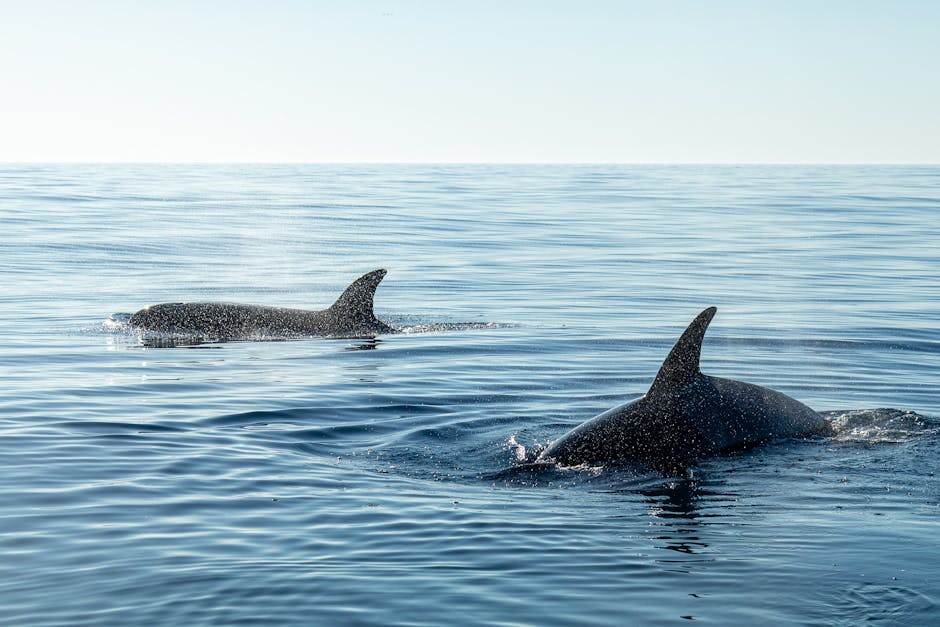
Orca Mothers Sacrifice Everything in Raising Sons
Orca mothers keep feeding their sons for life, and it costs them roughly half their chance of breeding again. That is the finding of a study published in Current Biology in February 2023, built on nearly four decades of observation of one of the most closely watched whale populations on Earth.
The study behind the headline
The paper, “Costly lifetime maternal investment in killer whales”, was led by Michael Weiss and colleagues at the University of Exeter and the Center for Whale Research, and published in Current Biology in February 2023. It looked at the Southern Resident killer whales, a small fish-eating population in the coastal waters of Washington State and British Columbia that has been individually tracked since 1976.
The analysis covered 40 female orcas and data collected between 1982 and 2021. Because every animal in the population is known by sight and its offspring recorded, the researchers could ask a question that is almost never answerable in a wild mammal: what does raising a particular calf actually cost the mother afterwards?
The cost falls on sons, not daughters
Each surviving son cut a mother’s chance of producing another calf in a given year by about half. A surviving daughter produced no measurable drop. The cost did not fade as the son matured either. It carried on for as long as he was alive.
That is unusual. In most mammals, parental investment tails off once the offspring can feed itself. An orca mother never stops.
Why the difference
It comes down to how orca society is arranged. Pods are matrilineal, built around mothers and grandmothers, and neither sex leaves. A daughter, though, becomes a competitor once she starts producing calves of her own, drawing on the same food within the same group, and her mother’s support drops away around the time she reaches breeding age.
Sons never reach that point. Adult males stay with their mothers and keep taking food from them. In the Southern Residents, which live largely on salmon, a mother will bite a fish in half, eat one part and hand the other to her son. He may be thirty years old and considerably larger than she is.
A genetic bet
If it is that expensive, why has evolution kept it? Because a son’s calves are somebody else’s problem. Male orcas mate with females from other pods, and the resulting calves are raised in those pods, drawing nothing from his mother’s group.
So a mother who keeps her son large, healthy and long-lived is spreading her genes through grandchildren she does not have to feed. Females tend to mate with older, larger males, and those males father more offspring, which makes the investment a bet on her son becoming one of them. She trades her own remaining fertility for a shot at a lot of grandcalves.
The protection does not stop either
Later in 2023 the same research group published follow-up work on injury patterns, showing that post-menopausal mothers appear to shield their adult sons from social aggression. Sons whose mothers were alive and no longer breeding carried fewer tooth-rake marks from other orcas than sons whose mothers were dead or still reproducing. Orcas are one of only a handful of mammals in which females live for decades after they stop breeding, and this line of work suggests part of what that long post-reproductive life is for.
Why it matters for conservation
The Southern Residents are in serious trouble. At the time of the study the population stood at around 73 animals, and a low birth rate is one of the reasons it is not recovering.
The 2023 work identified a factor in that birth rate nobody had accounted for. If sons halve their mothers’ future breeding success, the population’s demographic outlook is worse than the models assumed, on top of the pressures already known: a shortage of Chinook salmon, underwater noise, contaminants and vessel disturbance. Nothing can be done about the sons. But a model that includes the cost is a model that points conservation money at the right thing.
For more on the species, read our orca profile, or how resident and transient orcas differ.



Half their chance of breeding again, just to keep feeding a grown son. That’s a huge cost.
It is. And it’s only sons, not daughters, which is the strangest part of the study.