

Rescued Eight Month Old Dolphin Calf in Florida
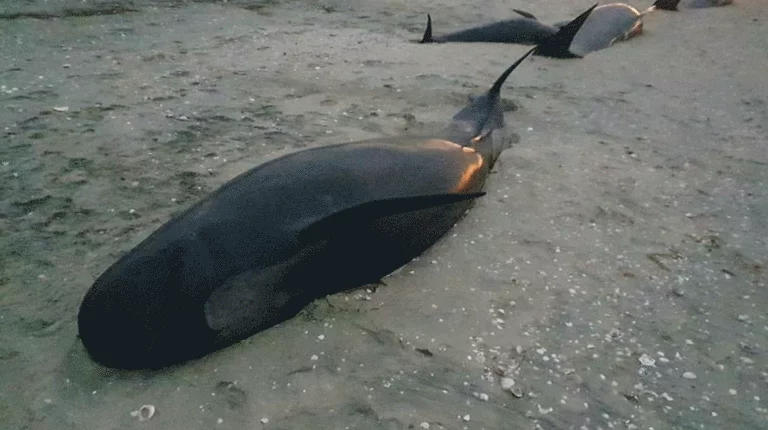
On 2 January 2022, a young bottlenose dolphin was found stranded on the shore at Fort Walton Beach, Florida, after a heavy storm. The beachgoers who found it did the right thing: instead of pushing it back into the water they called for help. Gulf World Marine Institute took the calf in and began rehabilitation. It received round-the-clock care and bottle feeds every few hours.
For the broader picture, see our dolphin conservation guide.
Why a calf this young was so vulnerable
A bottlenose dolphin calf of around eight months is still completely dependent on its mother. Calves nurse for at least a year and often for two or three before they are fully weaned. A calf alone on a beach has almost always been separated from its mother, and that separation is usually a symptom rather than the problem: the mother may have died, the calf may be sick, or it may have been too weak to keep up with the pod.
Hand-rearing a dolphin that young is close to the hardest job in marine mammal medicine. The animal has never learned to catch fish, has an immature immune system, and needs a specialised milk substitute in small, frequent feeds. Survival rates for stranded calves are low even with expert care.
What happens when an animal dies in care
When a rescued animal dies, the team performs a necropsy, the animal equivalent of an autopsy. Results are slow: laboratory analysis of tissue samples takes weeks or months. The point is not only to explain one death. If the cause is an infection, a toxin, or something showing up in several animals at once, that finding changes how the next stranding is handled.
Marine mammal rehabilitation in the United States is done almost entirely by permitted non-profit organisations and stranding network members rather than by government agencies. It is expensive, and it runs on donations and volunteer time.
Why dolphins strand
- Illness or infection, leaving the animal too weak to swim and navigate.
- Separation of a calf from its mother, often after the mother dies or the calf falls behind.
- Injury from boat strikes or entanglement in fishing gear.
- Harmful algal blooms, including Florida red tide, which produce toxins that reach marine mammals through their prey.
- Disorientation in shallow or unfamiliar water.
What to do if you find a stranded dolphin
This is the useful part of the story. If you see a dolphin, whale or sea turtle washed up on a beach, do not push it back into the sea. A stranded animal is almost always disoriented, sick or injured, and returning it to the water without assessment sends a dying animal back out.
- Stand well back and move dogs and onlookers away. These are wild animals and they carry diseases people can catch.
- Do not pour water down the blowhole and do not try to feed the animal.
- Write down where it is, as precisely as you can, and what state it appears to be in.
- Call the local marine mammal stranding network. In the United States, NOAA Fisheries coordinates the regional networks that respond to live and dead strandings.
- Wait for trained responders. They have the permits, the equipment and the veterinary support.
Reporting a stranding quickly genuinely improves an animal’s chances. The people who found this calf did the correct thing. Later that month, an entangled calf off Clearwater was freed in a rescue that kept it with its mother.
To understand the species at the centre of this story, see our profile of the common bottlenose dolphin.
Continue exploring at our store
If this article sparked your interest, head over to the We Love Dolphins merchandise store for related reads and gear.
Updated 25 October 2026: removed a report of the calf’s death that we could not confirm from any public source.




Damn 🙁