
The Wholphin: An Extremely Rare Hybrid Creature
The wholphin is real, and there have only ever been a handful of them. The name covers the offspring of a male false killer whale and a female bottlenose dolphin, a cross that has been recorded a few times in captivity and never confirmed in the wild.
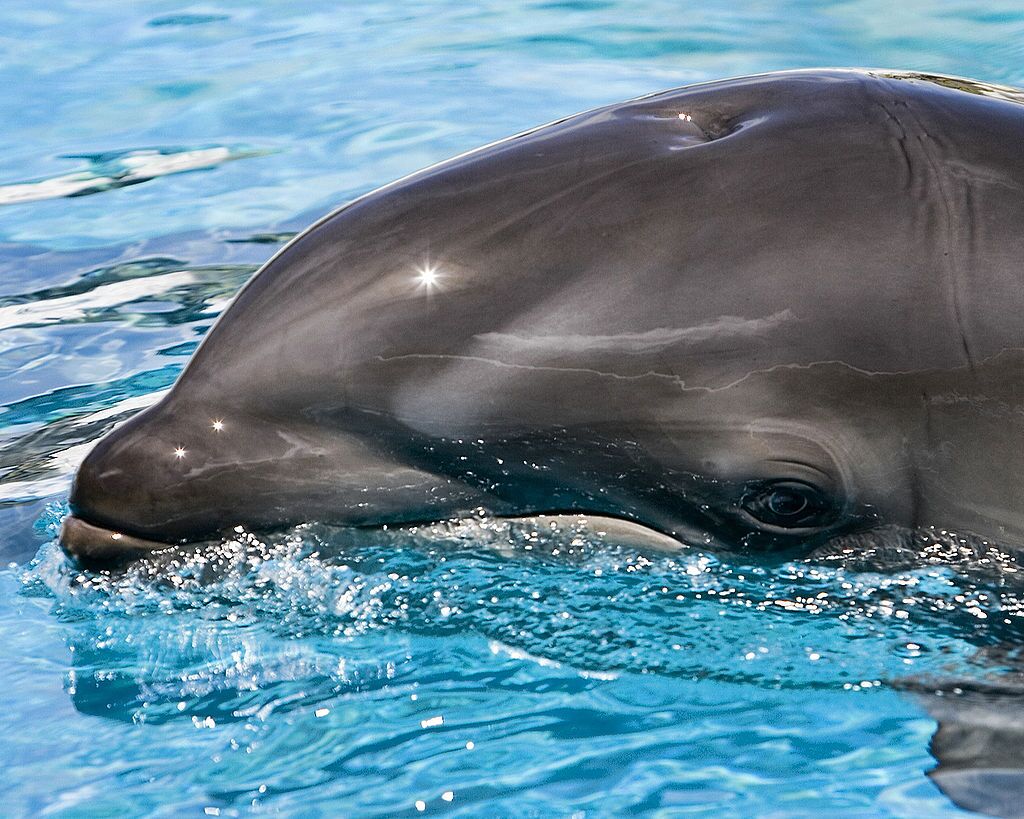
Wholphins carry features of both parents. Photo: Mark Interrante via Wikimedia Commons, CC BY-SA 2.0.
The cross is less unlikely than the name suggests. The false killer whale, despite its name, is a member of the same family as the bottlenose dolphin, Delphinidae. Both are toothed whales, and the two species overlap in range and are known to associate at sea.
Kekaimalu
The first recorded wholphin was a male calf born at Tokyo SeaWorld in 1981. He died after 200 days.
The one everybody knows was born at Sea Life Park in Hawaii on 15 May 1985, to a bottlenose dolphin called Punahele and a false killer whale called Tanui Hahai. She was named Kekaimalu, which translates roughly as from the peaceful ocean. She was the first wholphin to survive to adulthood, and she died on 8 July 2024 at the age of 39.
What a wholphin looks like
Kekaimalu sat between her parents on nearly every measure. Her skin was a dark grey, between the near-black of a false killer whale and the lighter grey of a bottlenose. She was larger than a bottlenose dolphin and smaller than a false killer whale, weighing around 600 pounds.
The neatest illustration is her teeth. A bottlenose dolphin has 88, a false killer whale has 44, and Kekaimalu had 66, exactly between the two.
Fertile, which is the surprising part
Most mammal hybrids are sterile. Kekaimalu was not. She had three calves, all fathered by bottlenose dolphins, which made each of them three-quarters bottlenose and one-quarter false killer whale.
Her first calf died within days. Her second, a daughter called Pohaikealoha, was born in 1991, was hand-reared by trainers, and died at nine years old. Her third, Kawili Kai, was born on 23 December 2004 and still lives at Sea Life Park. Kawili Kai grew fast: within months of birth she was the size of a one-year-old bottlenose dolphin.
Are there wholphins in the wild?
No confirmed false killer whale and bottlenose hybrid has been documented in the wild. Cetacean hybrids do occur out there, though. In August 2017 researchers off Kauaʻi documented a hybrid of a melon-headed whale and a rough-toothed dolphin, the first record of that particular cross, and it was widely and wrongly reported as a wholphin.
Very little is known about how a wholphin would live outside a tank. Everything on this page comes from a few captive animals at two parks and a handful of records. If you have seen credible documentation of others, leave a comment and we will follow it up.
Continue exploring at our store
If this article sparked your interest, head over to the We Love Dolphins merchandise store for related reads and gear.
For everything else about the dolphin family, start at our dolphin facts guide.


This is the first time I hear of a Wholphin! How interesting and fascinating!