
Do You Eat Dolphin Meat? Then You Need To Read This
Dolphin meat is still sold and eaten in a handful of places. If you eat it, or you are curious why anyone does, there are a few things worth knowing about where it comes from and what is in it.
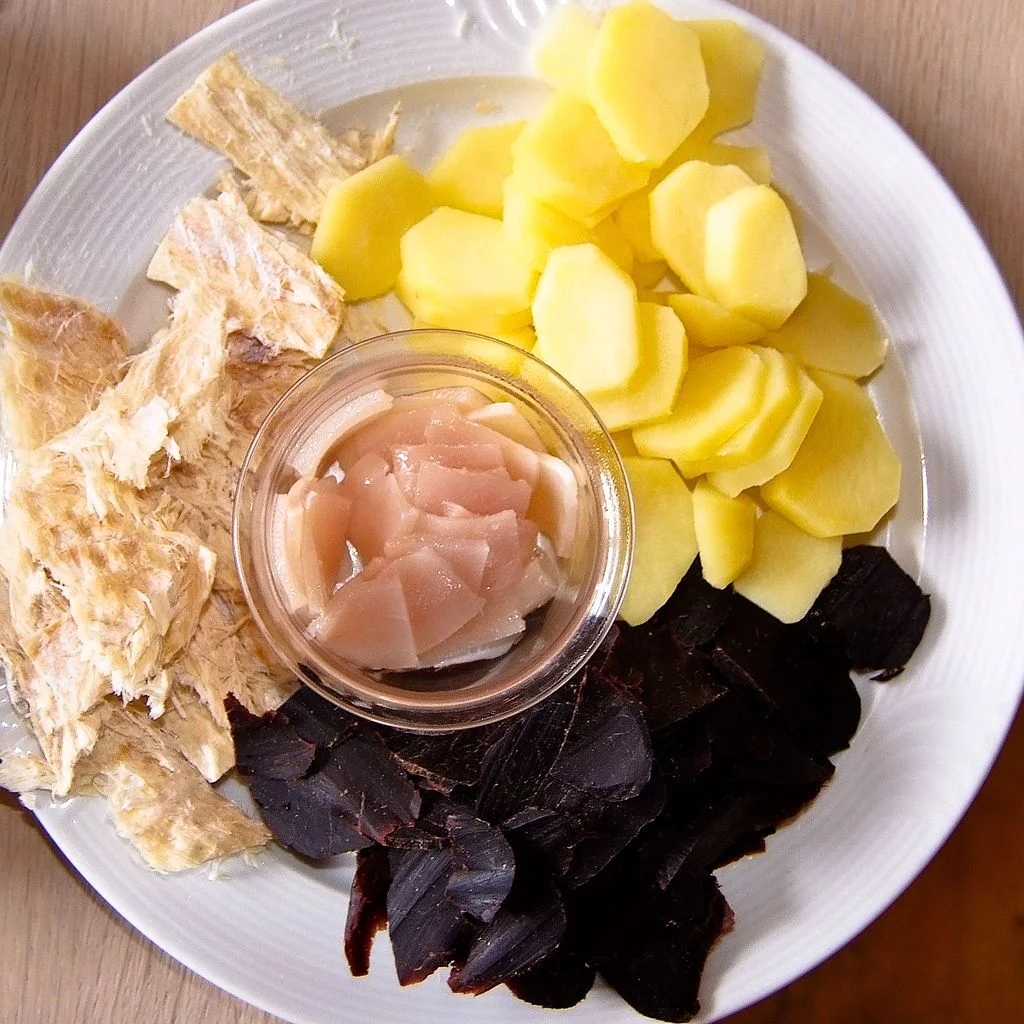
A plate of dolphin meat and potatoes, a traditional meal in the Faroe Islands. Photo: Arne List, CC BY-SA 3.0.
The meat is dense and so dark a red that it can look black. It is eaten raw or cooked, often with onion and garlic, or cut into chunks and fried or simmered with vegetables. People who eat it usually compare the cooked flavour to beef liver.
A long history, a shrinking practice
Eating marine mammals is not a novelty. Coastal peoples have hunted whales and dolphins for food, oil and bone for thousands of years, and at that scale the effect on populations was small. Industrial whaling changed the arithmetic. Once hunting was mechanised, species could be driven down within a few decades, and some were: the Steller’s sea cow and the Caribbean monk seal were both hunted to extinction.
Whaling and small-cetacean hunting have been part of life in the Faroe Islands since Norse settlement. The grindadráp continues today, taking an average of around 700 long-finned pilot whales a year. Faroese health officials themselves recommended in 2008 that pilot whale should no longer be considered fit for human consumption, on the grounds of mercury, PCB and DDT levels.
Dolphins are taken too. On 12 September 2021, 1,423 Atlantic white-sided dolphins were killed in a single drive at Skalabotnur, the largest dolphin hunt on record in the islands, and in 2022 the Faroese government set a provisional limit of 500 white-sided dolphins a year. Our post on the 2021 Faroese dolphin hunt covers what happened.
Where dolphin is still eaten
The Faroe Islands and St Vincent in the Caribbean both permit legal hunting and consumption. Dolphin hunting also persists in Japan, Peru, Madagascar and elsewhere, sometimes as tradition and sometimes as the cheapest protein available. In Peru the meat is known as chancho marino, sea pork.
Japan is the best-known case because of the Taiji drive hunt, which supplies both meat and live animals to aquariums. Illegal trade persists elsewhere, and where regulation has gaps, the trade finds them.
Greenland runs a regulated subsistence hunt that includes beluga, narwhal and harbour porpoise. In Peru, a 1996 law banned the capture and sale of small cetaceans, but illegal killing for bait and meat continues. On Malaita in the Solomon Islands, spinner and pantropical spotted dolphins are hunted seasonally, for meat and for teeth that are still used as traditional currency.
The mercury problem
Mercury enters water from industrial discharge and from coal burning, and bacteria convert it to methylmercury, which biomagnifies. Small organisms take it up, their predators concentrate it, and by the time you reach an apex predator like a bottlenose dolphin or an orca the concentrations are high. Dolphins are near the top of the marine food chain and they live for decades, which is exactly the combination that produces heavy loads.
The measured numbers are serious enough without exaggeration. Testing of dolphin meat sold in Japan has returned mercury concentrations of over 100 parts per million, hundreds of times Japan’s own 0.4 ppm regulatory limit for seafood. Japan’s Health Ministry advises pregnant women to eat no more than about 80 g of bottlenose dolphin every two months.
Methylmercury attacks the brain and nervous system. Documented effects include damage to vision, hearing and motor control, memory and cognitive impairment, and in severe poisoning, partial paralysis. Developing foetuses and young children are the most vulnerable, which is why the advice is aimed at pregnant women first.
Mercury is not the only contaminant. Blubber concentrates PCBs and other persistent organic pollutants, and cadmium builds up in the kidneys. Faroese food authorities advise adults to eat pilot whale meat and blubber no more than about once a month. Women who plan to have children are told to avoid the blubber, women who are pregnant or breastfeeding to avoid the meat as well, and nobody should eat the liver or kidneys.
Taiji gives the clearest data. In 2010 the National Institute for Minamata Disease tested hair from more than 1,000 residents and found mercury levels above the national average, which it linked to eating whale and dolphin meat. Neurological checks on the residents who asked for them found no signs of mercury poisoning, although some effects of mercury can take years to appear.
Why these hunts are legal
The International Whaling Commission’s 1986 moratorium covers large whales. Most dolphins are small cetaceans, which fall outside it and under national law, and that is the main reason these hunts continue. CITES controls international trade in all whales and dolphins but has no say over a domestic hunt.
What it does to dolphin populations
Taiji and the Faroes both attract sustained criticism, and the methods used in drive hunts are the reason. Beyond the direct hunts, dolphins are also killed to be used as bait. In the Amazon, botos were killed for use in the piracatinga catfish fishery, one of the pressures that has left the Amazon river dolphin listed as Endangered.
River dolphins are the clearest warning. The Yangtze river dolphin was declared functionally extinct in 2006, and the South Asian river dolphins are Endangered. None of those declines were caused by meat hunting alone, but every additional source of mortality lands on populations that reproduce slowly and recover slowly.
Whether it is eaten for prestige, for tradition or for protein, dolphin meat carries a real health risk to the people eating it and adds pressure to populations that are already struggling.
Continue exploring at our store
If this article sparked your interest, head over to our pick of the best dolphin books for related reads and gear.
Our dolphin facts guide covers the wider picture.
Updated 25 October 2026: merged our post on where dolphin meat is still eaten into this page, and replaced an open request for health data with the 2010 Taiji hair mercury study.


Oh my gosh no! I do not eat Dolphin meat and didn’t even know anyone did until reading this, those poor dolphins!
I didn’t know that some people eat dolphin meat. How awful!
I don’t eat dolphin nor have I ever tried it… but, why is it so horrible if people do? Humans eat other animals, plants, fish and whatever else I can’t think of at the moment. So what makes a dolphin such a taboo?