
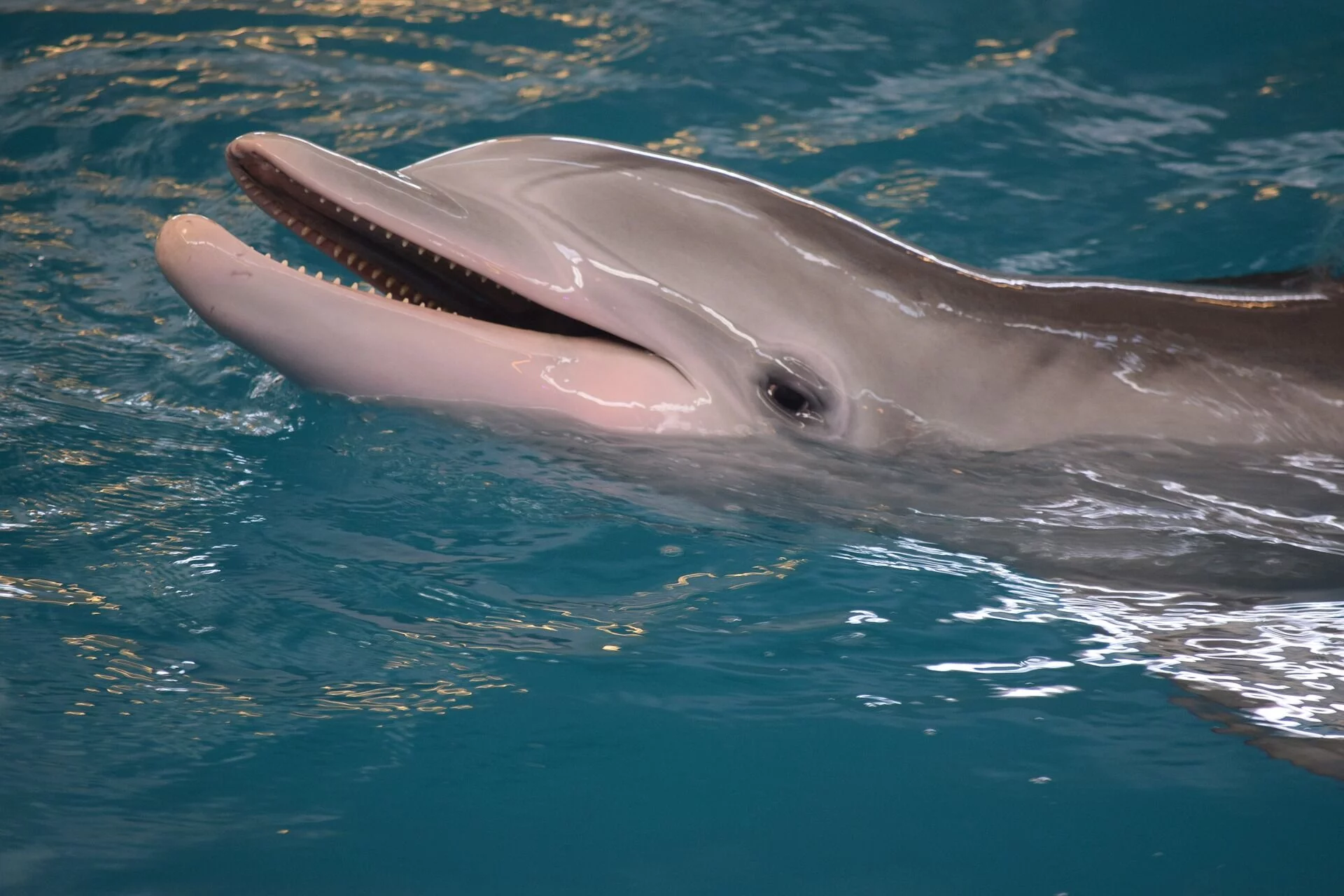
6 Clever Ways Dolphins Hunt For Food
Dolphins hunt for food unlike any other sea mammal. After all, what is the use of all that intelligence if they cannot use it?
Bottlenose dolphins have developed several clever hunting techniques.
Echolocation is the usual way dolphins detect prey in the water around them. But after detecting them, how do they actually get the fish from the water to their mouths? The prey are not hanging around waiting to get caught.
Using their brain power, some pods in particular areas have developed hunting methods that are unique to that group. Researchers keep finding new ones. The Indo-Pacific bottlenose dolphins of Shark Bay in Western Australia, in particular, have invented techniques not seen anywhere else.
6 clever ways dolphins hunt for food
1) Herding
Herding requires highly coordinated team work. A group of dolphins comes together and surrounds a school of fish with the intention of packing them tightly together.
Once the fish are packed into a ball, the dolphins take turns swimming through the dense concentration. Each dolphin feeds through the ball while the others keep it intact and stop the fish escaping. The cooperative effort gets everyone more food than hunting alone would.
2) Intentional beaching
A pod native to the waters off the Carolina and Georgia coast came up with this one. They catch their food by forcing fish up onto the shore and then beaching themselves to get at the struggling fish.
The dolphins in this area feed mostly on mullet. They use echolocation to find the schools and chase them toward shore at low tide. By rushing at the fish together they create a bow wave that pushes the mullet up onto the mud.
The hunters then follow their prey onto land and pick them out of the mud. It is called strand feeding, and it carries real costs:
- They can cut their skin on sharp objects like stones and oyster shells hidden in the mud.
- They can move too far up the bank and get stranded, unable to get back into the water.
- Time out of the water risks sunburn and overheating.
- Human activity in the area can disturb or injure them.
- The gritty mud that goes in their mouth along with the fish wears their teeth down over the years, which limits their hunting ability as they age.
Strand-feeding pods are small and local, and the technique is passed down within them. It is one of the clearest examples of a dolphin behaviour that exists in one stretch of coast and nowhere else.
3) Corralling
Here a pod chases a school of fish into shallow water, herding them closely without letting any escape. By surrounding them and pinning them near the shore, they create a tight concentration ready for the picking. The dolphins then alternate between eating and keeping guard so the school does not break up.
4) Sponging
Sponging is genuinely unusual, because most dolphins never do it. Only a small minority of the Shark Bay bottlenoses have taken it up, often put at about 5 percent of the population, and almost all of them are female.
A sponger wears a torn-off basket sponge over its snout like a glove. That cover lets it push into rock and rubble on the seabed, going after fish other dolphins leave alone, without shredding a very sensitive nose on urchins, stingrays, and sharp stone.
The sponge is usually a basket sponge, Echinodictyum mesenterinum. The targets are bottom fish without a swim bladder, such as the barred sandperch (Parapercis nebulosa), which are hard to pick up by echolocation, so spongers reach prey that other dolphins in the bay seldom take.
The behaviour was first described in the scientific literature in 1997. It passes from mother to daughter, and genetic work has traced the Shark Bay spongers back to a single inferred ancestress, nicknamed Sponging Eve, with the tradition estimated to be somewhere around 180 years old.
Sponging has been recorded in both the eastern and western gulfs of Shark Bay, and no population outside the bay is known to forage this way. Spongers also spend more time with other spongers than chance would predict (Mann and colleagues, 2012). Some sons of spongers learn the technique as calves, but males sponge far less than females.
5) Mud nets
Mud-ring feeding is another display of cooperative prowess. Once the dolphins have found their target, one individual swims a tight circle around the school while slapping the seabed with its tail, throwing up a ring of muddy water.
The only way out for the fish is up. The rest of the pod waits at the edge of the ring with mouths open for the fish that jump.
6) Shelling
Shelling, sometimes called conching, is also a Shark Bay speciality, studied by researchers at the University of Zurich working with the long-running Shark Bay dolphin project. A dolphin picks up a large empty conch shell with a fish sheltering inside, brings it to the surface, and shakes it until the fish drops into its mouth.
The interesting part is how it spreads. Unlike sponging, which passes down the female line from mother to calf, a 2020 study found that shelling spreads horizontally between peers, which is rare in dolphin foraging traditions and closer to how behaviours travel through great ape groups.
Observers initially assumed the dolphins were after the snails inside the shells, or simply playing, until they spotted the tail fin of the fish hiding inside.
Scientists are still watching to see what these animals come up with next.
Continue exploring at our store
If this article sparked your interest, head over to the endangered status of dolphins guide and We Love Dolphins store for related reads and gear.
For the broader picture, see our full dolphin facts guide.
Updated 25 October 2026: corrected the species of the Shark Bay dolphins. We also merged our post on sponging into this guide, adding the sponge and prey species and who sponges.




I was shocked to see these gentle giants preying for food! I mean I know they have to eat, but I never knew that these gentle giants can be predators like that-?? Very interesting! I don’t think I would have believed it if I didn’t see it for myself! Thank you for sharing!
Amazing how they’re smart enough to develop these ways of hunting for food it kind of amazes me how they would figure these ways out especially something as simple as shaking a conch shell, simple for us but for them to think to shake it until the fish falls out amazing.
Beaching seems like a very dangerous technique for them.
The synchronised attack in the beaching technique video is simply amazing!