
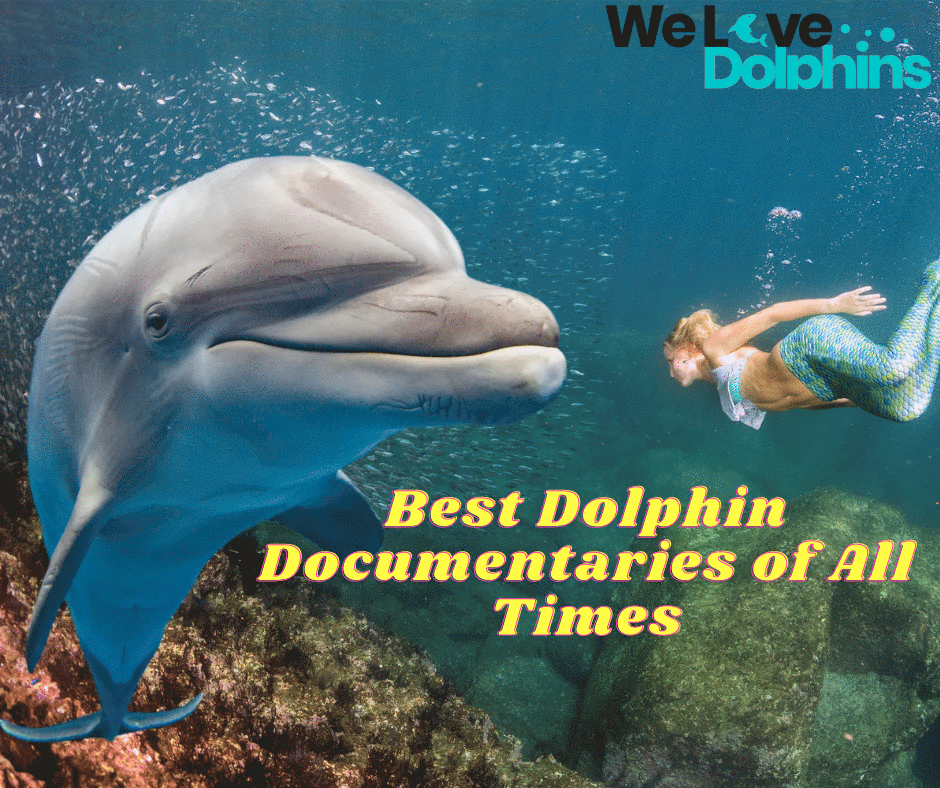
Best Dolphin Documentaries of All Time
The best dolphin documentaries combine close-up underwater filming with real conservation reporting, and a handful stand well above the rest. Films like Disneynature’s Dolphin Reef, the Oscar-winning The Cove, and Blackfish have shaped how millions of people understand cetaceans, captivity, and ocean health. I have watched all of them more than once, and below I explain what each one does well and who it suits.
Where to start
The titles below appear across Disney+, Netflix, and Amazon Prime Video depending on your region. I have grouped them by what they actually deliver, because a wildlife film and an investigative film ask very different things of a viewer.
Streaming rights move often, so check a listing service such as JustWatch for where each film is available in your country before you settle down to watch.
Dolphin Reef (2018)
This Disneynature feature follows a young bottlenose dolphin named Echo. It was released in French cinemas in March 2018 and reached Disney+ on 3 April 2020, narrated in English by Natalie Portman. Filming took place in French Polynesia, Hawaii, and Florida. It uses the pod as a window into the wider reef community: sea turtles, humpback whales, mantis shrimp, and cuttlefish all get their moment. It runs 78 minutes and is the gentlest entry point for children, with no captivity or hunting footage.
The Cove (2009)
The Cove won the Academy Award for Best Documentary Feature in 2010. It centres on Ric O’Barry, the trainer who caught and trained the five dolphins used for the 1960s television series Flipper and who later spent decades campaigning against dolphin captivity. The film documents the annual drive hunt at Taiji in Wakayama Prefecture, Japan, where dolphins are herded into a hidden cove. It is confronting, and it suits teenagers and adults rather than young children.
Blackfish (2013)
Directed by Gabriela Cowperthwaite, Blackfish examines Tilikum, a male orca captured off Iceland in 1983 and held at SeaWorld. The film connects him to the deaths of three people, including trainer Dawn Brancheau in February 2010. Its release triggered what became known as the Blackfish effect: SeaWorld announced in March 2016 that it would end its orca breeding programme and phase out theatrical orca shows, and California banned orca breeding for entertainment later the same year. Orcas are the largest members of the dolphin family, and the film’s argument about confinement applies to every captive cetacean.
Diving with Dolphins (2020)
Released alongside Dolphin Reef on Disney+, this companion film follows the camera crews who spent years in the water getting the footage. It explains the patience behind individual shots and shows behaviours including cooperative hunting and synchronised swimming. A good second watch once you have seen the main feature.
A Plastic Ocean (2016)
Journalist and film-maker Craig Leeson set out to find blue whales and ended up making an investigation into ocean plastic. It documents plastic fragments inside the stomachs of seabirds and marine mammals and explains how microplastics move up the food chain. David Attenborough called it “one of the most important films of our time”.
More films worth watching
Dolphins: Spy in the Pod (2014)
This two-part BBC series from John Downer Productions, narrated by David Tennant, hid cameras inside animatronic dolphins and other sea animals and swam them into wild pods. It catches behaviour a diver would never see, and it has no graphic scenes, so it suits younger viewers.
Secrets of the Whales (2021)
A four-part National Geographic series on Disney+, narrated by Sigourney Weaver. The orca episode follows matriarchs passing hunting methods down to their families; the orca is the largest member of the dolphin family. The other three episodes cover humpbacks, belugas and narwhals, and sperm whales.
The Loneliest Whale: The Search for 52 (2021)
Joshua Zeman’s film goes looking for the 52-hertz whale, an animal that calls at a pitch no other whale is known to use. It is not a dolphin film, but its account of ocean noise matters for every cetacean that hunts and keeps in touch by sound.
Blue Planet (2001), Blue Planet II (2017) and Oceans (2009)
Some of the best dolphin footage sits inside wider series. Both BBC Blue Planet series have strong dolphin sequences, including bow-riding and group feeding, and Oceans, by Jacques Perrin and Jacques Cluzaud, is a big-screen portrait of marine life with dolphins throughout. Productions on this scale can wait months at sea for one scene, and it shows.
What makes a dolphin documentary worth your time
Not every wildlife film earns its running time. When I recommend one, I look for three things.
- Real field footage. The strongest films spend years in the water, and that investment shows in unforced, natural behaviour on screen.
- Honest framing. A good documentary does not pretend captive performance is the same as wild life. The Cove and Blackfish are uncomfortable precisely because they refuse that comfort.
- A reason to act. A Plastic Ocean ends with practical steps, which is why it changed habits rather than only raising alarm.
One more check for bias: read the production credits. A film paid for by an aquarium chain or a marine park is likely to present captivity kindly. Look for named scientists and field research rather than dramatic music and slow motion, and for clear labels on what was filmed in the wild and what in a tank or staged.
Details that stick
Watching these back to back, a few things lodge. Bottlenose dolphins use signature whistles that work as individual names, and can recognise the whistles of former companions after 20 years apart. Dolphins in Shark Bay carry marine sponges on their beaks to protect them while foraging on the seabed, a behaviour passed from mother to daughter. Orcas, the apex predator at the centre of Blackfish, can live past 80 years in the wild, while captive lifespans have historically been far shorter. These are the sorts of details a well-made documentary lets you see rather than simply tells you.
Where to go next
If these films leave you wanting to know the animals rather than the cameras, a species profile is the natural next step. The star of Dolphin Reef is a bottlenose, so our common bottlenose dolphin profile is the obvious place to begin. Our guide to Risso’s dolphin shows how varied the family really is, and our guide to where to see dolphins shows where you can watch wild pods yourself.
Continue exploring at our store
If this article sparked your interest, head over to the We Love Dolphins merchandise store for related reads and gear.
Updated 25 October 2026: corrected where Dolphin Reef is set and what the signature whistle research showed, and merged our list of the best dolphin documentaries of 2026 into this guide, adding Spy in the Pod, Secrets of the Whales, The Loneliest Whale, Blue Planet and Oceans.
The Cove is such a great doc. It is horrible what those people do to those gorgeous creatures.
I enjoyed Blackfish. The documentary was compelling and aesthetically captivating.
Wow such amazing documentaries!
Great information, but sad also
I love documentaries of all kinds, but especially about dolphins.
Thanks for the suggestions!
I’m not sure humans understand Dolphins; they are clearly intelligent but humans tend to think ‘they are intelligent like us therefore they think like us’. A lot more research is needed to work out how they really think.
That be fun diving with the dolphins
I truly believe that dolphins are so smart and love people. They are beautiful creatures.